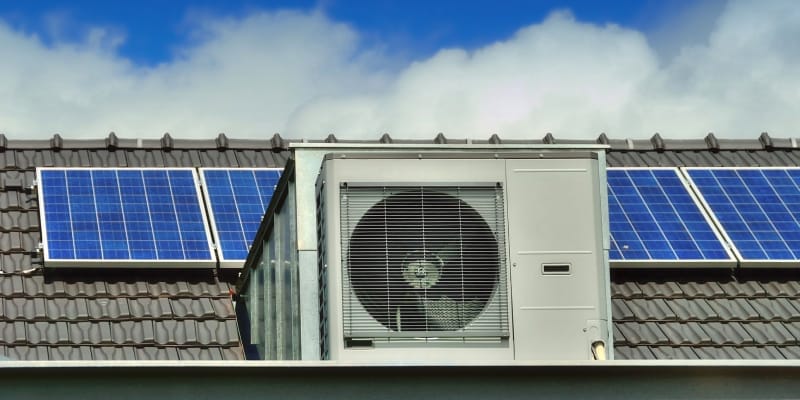
When the Chennai summer peaks, traditional air conditioning units draw substantial power from the grid and drive up your electricity bills. The summer forces you to use AC for a longer time, which consumes higher electricity tariff brackets.
There is nothing more distressing than your higher electricity charges because your consumption has crossed the threshold; hence, it is time to neutralise that heavy AC load with self-generated power.
To understand how solar panels reduce AC electricity bills and provide a solution for self-generated power, contact a reliable solar panel dealer to get started. For your home to be comfortably cool, installing solar panels that offset your energy consumption and provide a thermal barrier is a wise investment. Therefore, you benefit from both active savings and passive cooling.
The Dual Action Of Passive Cooling And Active Solar Energy Generation
Solar panels that you install will continue to take precedence in how they reduce AC electricity bills. They reflect heat and generate power, so make them your first line of defence.
Solar panels absorb sunlight to generate power, preventing the sun's rays from hitting your roof directly. This creates a shaded barrier that stops your home from excess heat and keeps the building underneath naturally cooler.
Without this shading effect, the cooling load would increase significantly. By keeping the upper structure of your home cooler, you reduce the AC's workload and improve efficiency.
Solar panels are becoming increasingly efficient for generating electricity during peak hours. Your AC unit will draw power directly from the panels and reduce your grid dependence. Hence, during those hours, you have a situation where your AC runs on solar power, your roof stays cooler, and your grid dependence drops.
Therefore, they generate power onsite, your AC can run on clean energy, and by generating your own power, you offset the electricity that would otherwise come from the grid.
During summer, solar generation is becoming perfectly aligned with peak AC usage; therefore, if you have solar panels, and since the panels also provide shade, your cooling needs are met efficiently for both homes and businesses.
Therefore, the combination of passive shading and active generation plays a massive role in your savings, because the panels both prevent heat and produce power, your AC works less and runs on free energy, and since this happens every sunny day, you have a scenario where your cooling costs drop, your grid dependence decreases, and your comfort improves.
Consider the Photovoltaic cells you install on your roof: they convert sunlight into electricity and will continue to do so for decades. If they are well maintained, they will power your AC effectively, and by maintaining them properly, you ensure long term savings. The panels both shade your roof and power your AC.
Your savings are substantial, and since this synergy diminishes utility costs, you will want to keep your panels efficient, so consult an expert for maintenance advice.
Maximising Financial Returns Through Solar Energy Efficiency
To ensure your AC runs on maximum solar power, you must clean your panels regularly and adjust their tilt. These straightforward maintenance steps show how solar panels lower AC bills by offsetting your cooling load and reducing your reliance on the grid.
In a dusty city, removing debris is essential to keep your solar array working at full capacity. Monitoring your system is equally important. These tools track performance through a dashboard, showing real time data so you can spot any drop in efficiency immediately.
For long term care, it is best to rely on a trusted professional. Furthermore, net metering proves highly effective. When your panels produce extra power during the day, you send that energy back to the utility company. In return, you receive bill credits that further lower your AC costs.
These credits are vital because they improve your return on investment and speed up your total savings. A well maintained setup can easily function for over 25 years, whereas neglecting maintenance leads to early degradation and lost efficiency.
Do not ignore these simple habits; they are incredibly effective for achieving energy independence. This is especially true for those who are looking to cut down on grid usage. If you want lower bills, focusing on quality maintenance ensures consistent results.
Every clean and check helps your savings grow. Once your system is running efficiently, you can then ensure the setup is perfectly sized to meet your specific cooling requirements.
After we understand how to protect our investment through proper care, we can move on to the strategic side of sizing a system that handles our daily AC usage.
Also Read: Understanding The True Solar Panel Lifespan For Your Home Asset
Strategic Planning For Solar-Powered Cooling Solutions
When you assess your cooling load to understand how solar panels reduce AC electricity bills, start by considering your project size and the number of rooms that you typically cool, and you love it when you make the assessment process straightforward.
There are physical constraints like
- Roof age
- orientation
- Materials that dictate your energy potential
It's a scenario where site specific conditions matter for your system to achieve high output, despite modern solar panels being efficient. If you ignore these factors, your generation will suffer, and your roof's characteristics have and will always influence performance.
Before we calculate your air conditioning units' daily consumption, let's understand the formula: hours of operation times watts gives watt hours, which you then divide by 1000 to get kWh, because this is the key to tracking usage, and when you have the kWh number, you have to use it to size your system, so use this math.
Furthermore, with on grid solar systems, your air conditioning units draw from both solar and the grid; this is exactly the reason why a grid connected setup is the smart financial choice for high cooling demand, because it's not so much a battle between solar and grid as a partnership, and understanding the work of your system grasping the connection and leveraging net metering enhances savings.
In addition, if you are unsure about the exact number of solar panels needed now, think again; instead of overcomplicating the decision, you can start with a smaller system. Therefore, for your future needs to be met, know that adding capacity later is standard, and when you plan for expansion, you'll be grateful.
Ultimately, no, you don't need to be a solar expert, but a professional assessment from a trusted expert ensures accuracy, so start by contacting a local expert and let's take a look at your specific roof. If you want flawless implementation, you should trust a pro and apply this guidance for any setup.
Embracing a Sustainable Cooling Future With Solar Energy
Understanding how solar panels lower AC bills leads to substantial long term savings. By cutting your reliance on the grid, you move toward true energy independence. This lifestyle upgrade offers both passive cooling and active power, making it a practical choice for any household.
To get the best return on your investment, you should look into the government’s rooftop solar subsidies now. Taking advantage of these financial incentives reduces your upfront costs and helps you recover your initial spend much faster. Beyond the money, switching to solar helps shift away from fossil fuels and lowers your carbon footprint.
With electricity prices likely to rise, installing a system early protects your savings. The sooner you make the switch, the more you benefit from available support. Solar energy is a reliable, long term solution that keeps your home powered while keeping costs low.
This is why choosing a specialist like Nantech in Chennai makes sense. Combining their expertise in UPS manufacturing with a professional solar setup ensures your home remains powered without interruption. With expert guidance at every stage, you can secure your energy future and start saving.