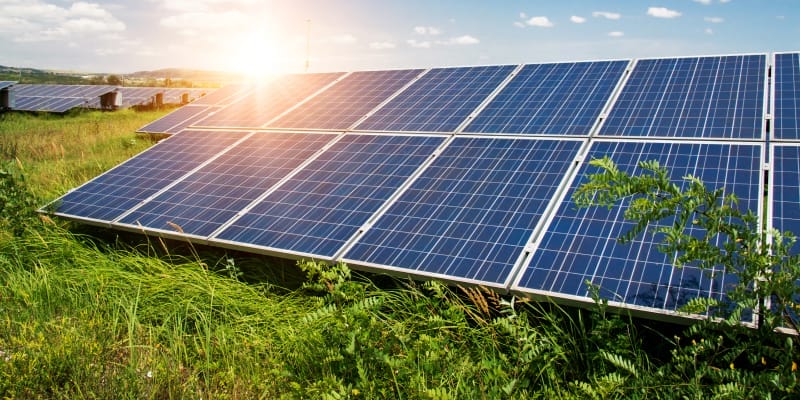
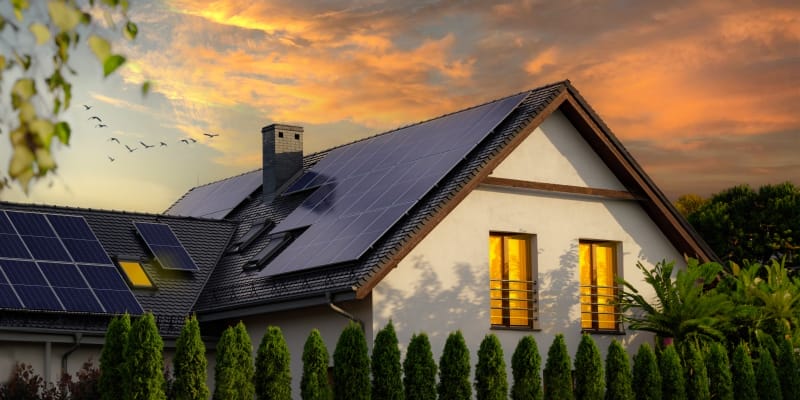
When you see your solar panels working under the bright summer sun, it’s easy to assume that heat and light work together. Hence, you probably expect maximum energy output, a common belief that needs a closer look. Discussing these expectations with a knowledgeable solar panel dealer can clarify how temperature shifts affect your system.
If you are wondering how solar panels reduce AC bills, it comes down to how they handle peak summer conditions. However, while sunlight helps generate power, excessive heat can actually reduce your solar panel's efficiency.
More sunlight is excellent for energy production, but the blistering ambient heat that comes with it is not. To clearly see what happens to solar panels during summer, we have to separate how light fuels the system from how heat slows it down.
This guide will explain the nuanced relationship, reassure you that high temperatures are not a cause for alarm, and build your confidence in your system’s performance during the hot months.
To begin, let’s explore how your solar panels generate electricity in the first place, as the process itself holds the key to this puzzle.
Solar panels generate electricity by converting sunlight into power through a process called the photovoltaic effect. Photons from the sun’s light strike the photovoltaic cells, dislodging electrons within the panel’s atoms. The movement of these electrons then creates an electric current.
But it is sunlight, not heat, that powers your panels; excess heat actually reduces their efficiency. This is because heat increases the internal resistance within the photovoltaic cells; as a result, this increased resistance leads to a voltage drop. Although the current might see a tiny increase with temperature, the voltage drop is more significant, leading to a net decrease in total power output.
When your solar panels sit on a hot roof, the cell temperature is often much higher than the surrounding air temperature. In fact, the panel temperature can be at least 20°C above the ambient temperature.
Quality solar panels are engineered to withstand these extreme temperatures and are unlikely to be damaged by the heat. Solar panels achieve their maximum efficiency at a moderate baseline temperature of 25°C. But how can you measure exactly how much power is lost for every degree of heat?
Therefore, keep this in mind: to find out exactly how much power your panels lose in the heat, you should look at the manufacturer's datasheet. There, you'll see a term called the 'temperature coefficient (Pmax)', a metric that you can use to quantify the power loss from heat.
This is where the temperature coefficient comes into play; it tells you the exact rate of power loss as the panel heats up past its baseline testing environment.
At its core, Standard Test Condition (STC) serves as the factory temperature benchmark where the panel's official nameplate power rating is determined. According to the National Renewable Energy Laboratory (NREL), a panel’s overall efficiency typically drops by a predictable margin for every degree of heat gained past that ideal laboratory baseline. This is the key calculation all panel owners rely on to gauge hot-weather performance.
For example, if your system experiences a standard temperature drop in performance and heats up significantly under the direct sun, its overall power output will decrease by a set percentage calculated from that manufacturer's baseline.
And conversely, for every degree of drop below that factory baseline, the panel's maximum power capacity increases by that exact same percentage, meaning cooler weather can naturally boost your daily electricity output.
Not only do standard silicon panels have the typical coefficients we discussed, but other technologies like thin-film panels offer different, often better, temperature coefficients.
By designing these panels for high-heat environments, manufacturers have created options that help maintain a higher solar panel efficiency on hot days.
For a region where high temperatures are the norm, you should consider alternatives to standard mono or polycrystalline modules, as they can be a wise choice for maintaining efficiency.
Although this predictable efficiency drop is an important factor, it doesn't represent the full picture of summer performance. The impact of heat is often overshadowed by a far more powerful element: the sheer abundance of summer sunlight.
Also Read: Solar Panels: An Eco-Friendly Way To Power Your Home
The summer sun is sitting higher in the sky, which lets your solar panels receive sunlight more directly. There are longer daylight hours in summer, too, giving your panels extra time to generate power. Having more daylight hours and a higher sun position will be the main reason your net power output is much higher in summer; hence, your system produces more energy.
This is because, for your system to produce maximum energy, the immense amount of summer sunlight far outweighs the small percentage loss from heat. When you compare the gains from longer days and direct sunlight, heat losses become a minor consideration. Solar installations will thrive in sunny regions and will produce the most energy during summer, when days are longer and brighter.
Even though when you have a cooler day, say, 10–20°C below the hottest, you might see a higher peak efficiency, the total daily generation is still highest in summer. But don't worry, your panels do not stop working completely; absolutely not. Sure, you will still see a steady output from your system even on the hottest afternoons, and your panels keep working.
When we look at the entire solar system, it's not just about the panels; not only do they face heat, but inverters and batteries also face challenges. Inverters, which convert DC electricity from your panels into AC power for your home, often face performance drops and can shut down completely to protect internal circuitry from severe thermal stress.
Continuous exposure to high temperatures bakes solar storage systems, causing lithium-ion cells to degrade rapidly and lose their ability to hold a full charge over time. It seems that when we consider how heat affects your panels, inverter, and batteries, recognising the need for a holistic system design becomes clear; we will explore that in the next section.
To address the common question of what happens to solar panels during summer, smart engineering and professional installation can effectively manage the heat's impact on your system. This is where the concept of passive cooling, implemented by a skilled solar installer, becomes your primary strategy.
First, install your panels a few inches above the roof surface to allow airflow underneath. This gap promotes convective airflow, which naturally cools the panels by carrying away excess heat. Proper tilt also improves airflow and reduces trapped heat.
Another key strategy is to mount heat-sensitive components, like your inverter, in a shaded area. This prevents the inverter from overheating, a concern for system performance. This technique is particularly valuable when using a string inverter, as it can be placed away from the hot roof array.
Additionally, panels constructed with light-coloured materials can help reduce heat absorption. Selecting the right solar installer or a reputable power solutions provider is crucial for implementing these strategies effectively.Local companies often have a better understanding of regional climate patterns, leading to a more optimised system design.
Ultimately, these smart installation practices ensure your system performs efficiently, even when the temperature rises, reinforcing the overall reliability of your solar investment.
The summer heat is not something you need to worry about for your solar system. Ultimately, summer remains your peak production season because extended daylight hours easily secure your maximum energy yields.
Modern solar panels are built with high-temperature resilience to withstand the hottest conditions. Your investment delivers reliable energy even during heatwaves. For homeowners, ensuring your entire power system is just as resilient is key.
As a leading UPS manufacturer in Chennai, Nantech specialises in backup power solutions to guarantee complete stability for your home. Contact us today for your power stability needs.


When the Chennai summer peaks, traditional air conditioning units draw substantial power from the grid and drive up your electricity bills. The summer forces you to use AC for a longer time, which consumes higher electricity tariff brackets.
There is nothing more distressing than your higher electricity charges because your consumption has crossed the threshold; hence, it is time to neutralise that heavy AC load with self-generated power.
To understand how solar panels reduce AC electricity bills and provide a solution for self-generated power, contact a reliable solar panel dealer to get started. For your home to be comfortably cool, installing solar panels that offset your energy consumption and provide a thermal barrier is a wise investment. Therefore, you benefit from both active savings and passive cooling.
Solar panels that you install will continue to take precedence in how they reduce AC electricity bills. They reflect heat and generate power, so make them your first line of defence.
Solar panels absorb sunlight to generate power, preventing the sun's rays from hitting your roof directly. This creates a shaded barrier that stops your home from excess heat and keeps the building underneath naturally cooler.
Without this shading effect, the cooling load would increase significantly. By keeping the upper structure of your home cooler, you reduce the AC's workload and improve efficiency.
Solar panels are becoming increasingly efficient for generating electricity during peak hours. Your AC unit will draw power directly from the panels and reduce your grid dependence. Hence, during those hours, you have a situation where your AC runs on solar power, your roof stays cooler, and your grid dependence drops.
Therefore, they generate power onsite, your AC can run on clean energy, and by generating your own power, you offset the electricity that would otherwise come from the grid.
During summer, solar generation is becoming perfectly aligned with peak AC usage; therefore, if you have solar panels, and since the panels also provide shade, your cooling needs are met efficiently for both homes and businesses.
Therefore, the combination of passive shading and active generation plays a massive role in your savings, because the panels both prevent heat and produce power, your AC works less and runs on free energy, and since this happens every sunny day, you have a scenario where your cooling costs drop, your grid dependence decreases, and your comfort improves.
Consider the Photovoltaic cells you install on your roof: they convert sunlight into electricity and will continue to do so for decades. If they are well maintained, they will power your AC effectively, and by maintaining them properly, you ensure long term savings. The panels both shade your roof and power your AC.
Your savings are substantial, and since this synergy diminishes utility costs, you will want to keep your panels efficient, so consult an expert for maintenance advice.
To ensure your AC runs on maximum solar power, you must clean your panels regularly and adjust their tilt. These straightforward maintenance steps show how solar panels lower AC bills by offsetting your cooling load and reducing your reliance on the grid.
In a dusty city, removing debris is essential to keep your solar array working at full capacity. Monitoring your system is equally important. These tools track performance through a dashboard, showing real time data so you can spot any drop in efficiency immediately.
For long term care, it is best to rely on a trusted professional. Furthermore, net metering proves highly effective. When your panels produce extra power during the day, you send that energy back to the utility company. In return, you receive bill credits that further lower your AC costs.
These credits are vital because they improve your return on investment and speed up your total savings. A well maintained setup can easily function for over 25 years, whereas neglecting maintenance leads to early degradation and lost efficiency.
Do not ignore these simple habits; they are incredibly effective for achieving energy independence. This is especially true for those who are looking to cut down on grid usage. If you want lower bills, focusing on quality maintenance ensures consistent results.
Every clean and check helps your savings grow. Once your system is running efficiently, you can then ensure the setup is perfectly sized to meet your specific cooling requirements.
After we understand how to protect our investment through proper care, we can move on to the strategic side of sizing a system that handles our daily AC usage.
Also Read: Understanding The True Solar Panel Lifespan For Your Home Asset
When you assess your cooling load to understand how solar panels reduce AC electricity bills, start by considering your project size and the number of rooms that you typically cool, and you love it when you make the assessment process straightforward.
There are physical constraints like
It's a scenario where site specific conditions matter for your system to achieve high output, despite modern solar panels being efficient. If you ignore these factors, your generation will suffer, and your roof's characteristics have and will always influence performance.
Before we calculate your air conditioning units' daily consumption, let's understand the formula: hours of operation times watts gives watt hours, which you then divide by 1000 to get kWh, because this is the key to tracking usage, and when you have the kWh number, you have to use it to size your system, so use this math.
Furthermore, with on grid solar systems, your air conditioning units draw from both solar and the grid; this is exactly the reason why a grid connected setup is the smart financial choice for high cooling demand, because it's not so much a battle between solar and grid as a partnership, and understanding the work of your system grasping the connection and leveraging net metering enhances savings.
In addition, if you are unsure about the exact number of solar panels needed now, think again; instead of overcomplicating the decision, you can start with a smaller system. Therefore, for your future needs to be met, know that adding capacity later is standard, and when you plan for expansion, you'll be grateful.
Ultimately, no, you don't need to be a solar expert, but a professional assessment from a trusted expert ensures accuracy, so start by contacting a local expert and let's take a look at your specific roof. If you want flawless implementation, you should trust a pro and apply this guidance for any setup.
Understanding how solar panels lower AC bills leads to substantial long term savings. By cutting your reliance on the grid, you move toward true energy independence. This lifestyle upgrade offers both passive cooling and active power, making it a practical choice for any household.
To get the best return on your investment, you should look into the government’s rooftop solar subsidies now. Taking advantage of these financial incentives reduces your upfront costs and helps you recover your initial spend much faster. Beyond the money, switching to solar helps shift away from fossil fuels and lowers your carbon footprint.
With electricity prices likely to rise, installing a system early protects your savings. The sooner you make the switch, the more you benefit from available support. Solar energy is a reliable, long term solution that keeps your home powered while keeping costs low.
This is why choosing a specialist like Nantech in Chennai makes sense. Combining their expertise in UPS manufacturing with a professional solar setup ensures your home remains powered without interruption. With expert guidance at every stage, you can secure your energy future and start saving.

Solar energy offers one of the most effective ways to make a real difference showing how solar panels help the environment by cutting emissions, lowering reliance on fossil fuels, and promoting cleaner air. For anyone who is eco-conscious, starting this transition now matters taking action against climate change reduces global warming, and despite minor manufacturing emissions, solar panels have a short energy payback period that quickly shrinks your carbon footprint. Working with a trusted Solar panel dealer can help you plan this clean energy shift step by step. Let’s explore how to build a sustainable power future together.
Every time you flip a light switch, there’s a chance to choose a cleaner path. Solar energy isn’t just hardware, it’s a way to replace fossil fuels and cut greenhouse gas emissions like CO₂ (carbon dioxide) and methane. By generating your own clean power, you’re taking meaningful steps for your home and community’s health embedding progress into your lifestyle.
So, how solar panels help the environment goes beyond electricity. They reduce
As more people in your community adopt solar, air quality improves, helping prevent chronic bronchitis and cardiovascular issues. Millions breathe unsafe air, and with the World Health Organisation reporting that most people are exposed to pollutants, your switch to clean energy is vital.
Even small choices make a difference: installing solar can reduce local traffic emissions, lowering exposure to harmful chemicals like benzene or formaldehyde. Solar panel ensures your home taps into a sustainable energy system, balancing environmental benefits with long-term reliability.
By taking these steps, you’re not just updating your technology you’re creating a safer, healthier, and more sustainable future for your family and community.
Next, let’s explore how these solar solutions translate into measurable CO₂ savings and forest-equivalent benefits.
Understanding the environmental impact of your solar system starts with
However, the story of how solar panels help the environment extends beyond carbon accounts; therefore, let’s take a look at the blueprint for resource and water conservation next. Transitioning to a guided approach for the next major benefit will allow you to apply sustainability in any field or platform.
There are traditional power plants that consume vast amounts of water for cooling, but Solar Photovoltaic (PV) systems are all about providing energy, saving water, and making technology feel accessible that you can install on your roof. So that you don't waste resources, and you significantly advance water conservation.
Water Scarcity: How to cope with the change? Here, you’re finding solutions, and solar is becoming more popular by the second as the World Wide Fund for Nature (WWF) reports 1.1 billion people lack access. Or, if you ignore the fuel cycle, your reliance on mining, drilling, or fracking for fossil fuels just doesn’t work; case in point: don’t be a catch-all that ignores the depletion of finite resources.
For your home to survive future climate updates, it needs to avoid hazardous waste from coal-fired plants; otherwise, you’re wasting money and risking land degradation. At its core, local generation is about efficiency. Again, think of the energy grid: by generating power on-site and thus continually bypassing traditional delivery, you reduce energy transmission losses, and it’ll be worth it.
In a nutshell, understanding how solar panels help the environment requires a firm, confident commitment to preventing ecological damages: acid rain, ocean acidification, and habitat loss. A new era calls for new tactics; before we talk about land use, let’s lay out this blueprint one layer at a time.
Also Read: Understanding The True Solar Panel Lifespan For Your Home Asset
Every installation can engage, persuade, and transform land responsibly. When designed thoughtfully, solar farms have minimal impact on surrounding ecosystems while generating substantial environmental benefits. Wildlife thrives alongside quiet, low-impact energy production, free from noise or light pollution.
Sustainable land use starts with small, deliberate choices. By combining rooftops, degraded lands, and smart design, you reduce your footprint and contribute to a cleaner, healthier environment.
Don’t ask if land protection is enough; as this strategy builds a sustainable future, you’ll want to start by reducing your own footprint. Let’s lay out this blueprint one layer at a time.
A simple, well-planned system makes energy use straightforward, reliable, and efficient, while cluttered setups create unnecessary stress.
Pillars of a good solar system are:
Working with a qualified Solar panel dealer ensures your installation is smooth, professional, and long-lasting. This is exactly how solar panels help the environment while securing your home’s energy future.
Before we talk about the future, let's understand what a net-positive home looks like today. You only start saving money after all this planning is complete. Above the fold on your property, the idea of sustainability can capture attention and prepare you for what's next.
In the energy universe, the sun never diminishes: what does it do? It helps optimise your footprint. Why act? Solar energy is the primary solution for climate change, setting the precedent for global sustainability.
When solar energy powers Earth for a year, ignoring your long operational lifespan means you’re just guessing. Your choice is a North Star; this is how solar panels help the environment by ensuring a net-positive impact.
Adopting solar isn't a one-and-done deal; if you seek carbon neutrality, the renewable world is beckoning. This is why a Solar panel dealer and leading UPS manufacturers in Chennai, like Nantech, inherently recognise effective solutions. Instead, do this: contact Nantech to make your transition firm, confident, and memorable.

A solar panel’s lifespan is not defined by the moment it stops producing electricity but by its useful life, typically 25 to 30 years, during which it delivers most of its original output. This gradual reduction in efficiency is known as solar panel degradation, a predictable decline that shapes the overall solar panel lifespan based on environmental exposure. On average, degradation occurs at a rate of 0.5% to 1% per year.
A 2024 study by the U.S. National Renewable Energy Laboratory (NREL) identified a median annual performance loss of 0.75%. In practical terms, a panel operating at full capacity in its first year will still perform at 99.25% in year two and over 81% after 25 years. This predictable decline explains why manufacturers offer performance warranties, typically guaranteeing 80% efficiency at the end of the warranty period.
Rather than being a concern, this managed degradation reinforces solar panels as reliable, long-term assets. However, degradation rates vary based on material and manufacturing quality, which is why choosing a reputable solar panel dealer plays a critical role in ensuring long-term performance and value.
The foundation of a long solar power system lifespan rests on two key pillars - material quality and manufacturing quality. The type of panel you choose and how well it is built largely determine how long it will reliably produce power for your home.
For the longest-lasting investment, monocrystalline solar panels are the premier option. Made from pure silicon, they offer superior material quality and typically deliver a lifespan of 25 to 30 years. This high-quality construction results in a very slow performance decline - with degradation rates usually between 0.3% and 0.5% per year. Even after 25 years, monocrystalline panels can still operate at roughly 80% to 92% of their original efficiency.
Polycrystalline solar panels provide a dependable and more cost-effective alternative, though they generally have a slightly shorter lifespan of around 20 to 25 years. Thin-film panels, while affordable and flexible, have the shortest lifespan - typically lasting 10 to 20 years.
Beyond the solar cells themselves, overall construction quality is equally critical. Durable aluminium frames are widely preferred because they resist corrosion and handle temperature changes effectively - protecting both the panel edges and internal cells. High-quality sealing, soldering, and connectors further prevent moisture ingress and electrical failure. To identify panels built to these standards, look for third-party certifications from organisations such as the International Electrotechnical Commission (IEC) or Underwriters Laboratories (UL) - which confirm rigorous safety and performance testing.
While a panel’s built-in quality is essential, the solar panel lifespan it achieves in your home is also strongly influenced by external factors after installation. Climate, weather conditions, and installation quality are the two most significant forces shaping long-term performance.
Persistent high heat and humidity place physical stress on panels - causing materials to expand and contract through repeated temperature cycles. Over time, this can gradually degrade internal connections and seals. Panels installed in moderate climates generally degrade more slowly than those exposed to consistently high temperatures. That said, most modern solar panels are rigorously engineered and tested to withstand extreme conditions - such as hail, heavy rain, and snow.
While the weather is beyond our control, installation quality is not. Poor installation can result in,
A professional, high-quality installation acts as the first and most critical line of defence - directly protecting the system’s long-term performance.
Ongoing care is straightforward. With no moving parts - solar panels are low-maintenance.
The only significant and predictable maintenance cost over the system's life is the replacement of one component - the inverter.
It is a manageable, long-term cost you can anticipate, as an inverter typically needs to be replaced every 10 to 15 years.
Ultimately, while climate is an uncontrollable variable - ensuring excellent installation quality and performing straightforward maintenance are your most powerful tools for protecting your solar investment for the long haul.
Moreover, these hands-on measures protect your asset, but your investment is further secured by the powerful guarantees that manufacturers put in place to ensure performance for decades.
Also Read: Solar Panels: An Eco-Friendly Way To Power Your Home
In addition to hands-on care - your investment is further protected by the strong legal guarantees manufacturers provide to support long-term performance. There are two primary warranties that safeguard your system - the Product Warranty and the Performance Warranty.
The product warranty covers defects in materials and workmanship and typically lasts between 10 and 25 years. What happens after 20 years of solar panels? The performance warranty directly addresses long-term effectiveness by guaranteeing energy output over time. Specifically, it ensures the panel’s performance will not decline below approximately 85% of its original capacity over a 20-year period.
This guarantee represents the manufacturer’s confidence in the product’s durability and secures the long-term value of your investment against degradation. To put this into perspective, few major home improvements - such as a roof or boiler - come with a comparable 25-year performance guarantee.
So, how often do solar panels need to be replaced? Many high-quality solar panels continue producing meaningful power well beyond their 25- or 30-year warranty period.
This long-lasting durability naturally leads to an important final consideration - what happens to solar panels at the very end of their extended lifecycle?
When your solar panels complete their useful life of around 30 years, they are decommissioned and require careful end-of-life management. The good news is that solar panel recycling processes are becoming more robust and viable as technology advances. By recovering valuable materials, like
These specialised facilities capture crucial resources. This direct action reduces the overall waste stream and prevents useful materials from ending up in landfills.
This is why there has been notable progress in creating specialised recycling plants to manage the growing number of panels. Therefore, this complete lifecycle perspective - from responsible recycling to regulated disposal - is a crucial final chapter that solidifies the true long-term value and sustainability of your solar investment.
Decades of research and real-world data from various regions and climates consistently affirm the long-term reliability of solar panels - confirming their status as a secure investment built on durable, long-term value. This makes your solar panel a low-maintenance, cost-saving home asset, designed to deliver reliable power generation for the entirety of its 25 to 30-year solar panel lifespan and beyond.
When you consider its complete journey - from resilient manufacturing through to responsible end-of-life management - the true sustainability and enduring worth of this technology become clear. Therefore, for your home to achieve genuine, long-term power security, investing in a system with a proven - long-lasting solar longevity is a critical step.
For homeowners in Chennai ready to secure this lasting benefit, reach out to Nantech-expert UPS manufacturers who understand precisely what it takes to build a truly reliable and efficient home energy foundation.
Reach out to Nantech today for a consultation and secure your power supply.

The shift towards sustainable energy has propelled India to be a global force in solar energy initiatives, offering exciting possibilities for homeowners in Tamil Nadu. With registered solar panel dealers across the state providing competitive prices in 2024, the reduced installation costs and government subsidies and support systems have made solar power a viable option. The state's increasing focus on clean energy alternatives with a lower carbon footprint has made solar energy a popular choice for many households.
This comprehensive guide covers everything you need to know about Tamil Nadu's solar power subsidies, helping you make an informed decision about your home's energy use.
The Tamil Nadu Government has inaugurated a Rooftop Solar Subsidy Scheme in partnership with the Government of India (Ministry of New and Renewable Energy—MNRE). This scheme has made solar power more accessible to Tamil Nadu consumers through the services of handpicked dealers. The solar power subsidy in Tamil Nadu is available for grid-connected systems. An on-grid solar system is more affordable since it does not require solar batteries. Consumers can also opt for a hybrid model system with solar batteries for on-site power reserves. However, this off-grid hybrid system is not eligible for subsidy.
Here's a detailed breakdown of solar power subsidy and system costs in Tamil Nadu:
| S. No. | Solar System Capacity in kilowatts (kW) | Tentative Price in Rs. (₹) | Subsidy in Rs. (₹) | Net Price Likely in Rs. (₹) |
|---|---|---|---|---|
| 1 | 1 | 75,000–85,000 | 30,000 | 45,000–55,000 |
| 2 | 1 | 1,50,000–1,70,000 | 60,000 | 90,000–1,10,000 |
| 3 | 1 | 1,90,000–2,16,000 | 78,000 | 1,10,000–1,37,000 |
Also Read: A Step-by-Step Guide to Solar Savings for Your Home
Note: The scheme does not cover commercial or industrial consumers.
Getting a solar panel subsidy in Tamil Nadu is simple through the MNRE’s portal, the Rooftop Solar National Portal. The portal offers a user-friendly interface with simplified pricing and subsidy calculations across different slabs, making the application process straightforward. Under the PM Surya Ghar Muft Bijli Yojana scheme, over one crore households in Tamil Nadu already get monthly free electricity.
Step-by-step process: The National Portal for Rooftop Solar has outlined the process on its website. Here's how to get your solar installation with a subsidy:
Installing solar panels with government subsidies offers multiple benefits, from environmental impact to financial savings. Here's what you can expect:
Though residential rooftop solar adoption has been slow, improved subsidy policies by the state government are set to accelerate home solar installations in the coming years.
Tamil Nadu's rooftop solar subsidy scheme, in partnership with the Indian government, presents an excellent opportunity for households to switch to solar energy. Nantech Power Systems Pvt. Ltd., one of the trusted inverter dealers in Chennai offering complete solar solutions, can help you design a solar energy system tailored to your needs. We are authorised to undertake government-subsidised installations and provide comprehensive services, from site inspection and customised system design to professional installation for residential, commercial, and industrial properties. Contact us today to begin your solar journey and benefit from government subsidies.

Switching to solar energy is a significant move for homeowners looking to cut down on their electricity costs while playing a part in protecting our environment. Figuring out the quantity of solar panels your house requires is not just an eco-conscious decision. It is a step towards financial liberation and self-sufficiency in energy.
This guide from Nantech, the leading solar panel supplier and dealer in Chennai, walks you through the essentials of calculating your energy consumption, realising potential savings on electricity expenses, and making informed choices regarding installing solar panels.
Let us delve into how the power of the sun can light up your way to a brighter, more sustainable future.
Understanding the electricity your house uses is the initial step in determining the required total sum of solar panels. This understanding assists you in deciding the size of the solar system that will best fulfil your energy demands.
Begin by examining your utility bills, which offer a wealth of data on your monthly electricity use. Analyse your consumption over the previous year to compute your daily and yearly average electricity usage, setting the stage for determining the required quantity of solar panels.
Note that electricity consumption varies widely among different homes. Key aspects influencing this include:
Taking these aspects into account aids in estimating your energy demands and the necessary solar system size more accurately.
Imagine your family uses around 900 kWh monthly. To find your day-to-day usage, divide this figure by the days in a month, resulting in an average daily consumption of about 30 kWh.
When picking solar panels for your residence, it is crucial to understand three aspects:
The wattage of a solar panel indicates the electricity it can generate under ideal conditions. Currently, residential solar panels on the market vary from 250 to 400 watts per piece. A 300-watt panel, for example, will produce more electricity than a 250-watt one under identical conditions. Hence, opting for higher-wattage panels might mean you will need fewer of them, especially if your roof space is limited.
Efficiency is another essential element, reflecting the percentage of sunlight a panel can convert into usable electricity. Recent advancements in solar technology have significantly boosted panel efficiency, making solar a more feasible option for homeowners. High-efficiency panels transform more sunlight into electricity, necessitating less space to meet your energy needs.
As solar technology progresses, the efficiency of solar panels continues to rise. This improvement is crucial for homeowners contemplating solar energy. With the latest advancements in photovoltaic (PV) technology, panels now capture and convert sunlight into electricity more efficiently, enhancing the effectiveness of solar systems even in less sunny locales.
The decision on the correct solar panel wattage hinges on various factors, including your home’s energy use and roof space availability.
To select the most fitting panel wattage:
To calculate the required solar panels for your residence, utilise this formula:
Wattage of solar panel wattage x maximum sunlight hours x total panel count = Daily power consumption
Assuming your house consumes 30 kWh daily, you are considering 300-watt panels, and your area gets an average of 5 maximum sunlight hours daily, you would need about 20 solar panels to meet your daily energy requirements.
While these estimates offer a general idea, several variables can impact the precise sum total of panels needed. These include your roof's orientation and slope, potential obstructions like trees or buildings, and the panels' efficiency over time.
Hence, seek guidance from solar experts who can conduct a thorough assessment to ensure your solar panel system is accurately sized.
With the correct quantity of solar panels, you can notably reduce your electricity expenses and contribute to a sustainable future. Remember, each home is unique, so a personalised assessment is essential to fully harness solar energy's benefits.
When contemplating solar panels for your residence, comprehend the initial outlay and the potential return on investment (ROI). The installation cost encompasses the following:
Government incentives and tax deductions significantly alleviate initial costs and enhance the financial feasibility of solar projects. These benefits can drastically reduce the upfront investment, rendering solar energy an even more appealing option. Investigating the incentives available in your locale is imperative to fully leverage these opportunities.
Regular maintenance is essential for maximising the lifespan of your solar panels and ensuring continued savings. By carefully weighing the initial expenses, potential savings, and available incentives, you can make a well-informed decision about solar energy and enjoy the financial and environmental benefits for years ahead.
To ensure your solar panels remain efficient and durable, several vital practices are essential:
Many options exist for those who prefer professional services to maintain their solar panel systems. Professional cleaning and maintenance services ensure your setup is inspected and cleaned by experts, which is especially advantageous for those unable to perform these tasks themselves or seeking to guarantee a thorough examination.
As our exploration of solar panels' potential to significantly trim down electricity costs and enhance energy self-sufficiency concludes, it is evident that the journey toward adopting solar energy is both fulfilling and essential.
With knowledge of calculating your house's solar needs and the impressive savings achievable, you are now ready to make a decisive move towards sustainability.
Should you seek expert guidance and customised power solutions to optimise your solar investment, Nantech is prepared to help. Secure your power supply with Nantech’s expertise, embarking on a path that not only lightens the load on your finances but also contributes to a cleaner, greener planet.
With the right solar configuration, your residence can become a model of efficiency and environmental responsibility, showcasing your vision and dedication to a sustainable future.