Nantech power systems business logo

BLOG

Understanding the risks of car battery terminal corrosion

As the monsoon season arrives in Chennai, it's a time when you should give your car some extra attention, and a little care now can save you from trouble later. Checking in with authorised Exide car battery dealers allows you to source a reliable power backup before the heavy downpours hit.

The high humidity and constant moisture from the rains are especially tough on your car's electrical systems; they can cause hidden damage that you might not notice until it's too late. In fact, these conditions often lead to a common yet overlooked issue: battery terminal corrosion.

As a result, this seemingly small build-up can become a primary cause of sudden failure, leaving you stranded with a car that won't start. Let's use this guide to find a simple, effective way to identify, clean, and prevent this problem, helping you avoid costly breakdowns this wet season.

Identifying the signs and effects of battery corrosion

Start by inspecting your battery terminals for any visible signs of trouble. This corrosion creates a barrier on the terminals because it acts like a blanket that blocks the flow of electricity — preventing the battery from delivering power efficiently.

Keep an eye out for these clear indicators:

  • Crusty Build-up: A bluish-greenish, powdery copper sulfate layer forming around the metal terminals. While corrosion naturally develops on the positive post, heavy build-up on the negative terminal specifically signals a chronic undercharging issue, which is highly common during heavy monsoon driving.
  • Slow Engine Crank: When you turn the key, the engine may turn over slowly because the battery cannot send enough current to the ignition system.
  • Flickering Electricals: Your headlights and dashboard lights may flicker, indicating your components are suffering from an insufficient power flow.

Beyond starting trouble, corrosion increases electrical resistance. This can cause voltage drops that may damage sensitive electronics like the Engine Control Unit (ECU) or radio. This extra resistance forces your alternator to work much harder, yet it still leads to reduced battery efficiency and a shorter overall lifespan for your battery.

If you leave this problem unchecked, you risk a sudden failure that could leave you stranded on a rainy day when you need your car most. So, what actually causes this corrosive build-up, and why does it seem to get worse during Chennai's monsoon season?

Exploring why high humidity accelerates battery corrosion

The chemical solvent housed inside a standard car battery contains a robust mixture of sulfur-based acids that naturally turn gaseous over time and slowly escape through the casing vents during daily operational cycles. While the release of these vented acid vapours is entirely common during normal vehicle usage, the gas emissions alone do not create the thick, stubborn crust you typically see building up on your vehicle's connections during the heavy rainy season.

The real catalyst behind this severe structural degradation is the exceptionally high atmospheric moisture and humidity levels that characterise the local monsoon climate. By mixing directly with the damp monsoon air, these venting sulfuric fumes trigger an aggressive chemical reaction right on the surface of the metal terminals, and this specific chemical interaction is what ultimately creates the crusty, power-blocking layer known as battery terminal corrosion.

Think of it exactly like raw metal rusting significantly faster when it is left out in a deeply damp or wet environment, as the exact same environmental process is actively at work under your hood. Not only does the intense atmospheric humidity drastically accelerate this chemical oxidation process, but the constant physical vibrations experienced while driving over deeply rutted monsoon potholes also make the structural problem significantly worse by causing more internal gases to escape the unit.

Now that you fully understand the hidden environmental reasons why this structural build-up happens, your next practical step is learning the precise steps to safely clean it away at home.

Also Read: Quick Tips To Keep Your Car Battery Healthy

A simple guide to cleaning battery terminals at home

Before you begin the process of cleaning battery terminals, ensuring your safety is the single most important step.

  • Engine Off
    First, make sure your car’s engine is switched off and has had time to cool down completely.
  • Protective Gear
    It is also crucial to wear safety gloves and eye protection to shield yourself from any potential acid splashes.
  • Disconnect Order
    When disconnecting the cables, always remove the clamp from the negative (-) terminal first, before touching the positive (+).
  • Reconnect Order
    Later, when reconnecting, you will follow the reverse order: attach the positive (+) clamp first, then the negative (-).

Thankfully, you can tackle most cases of battery terminal corrosion with just a few simple items from your home.

1. To start, prepare a cleaning paste by mixing a tablespoon of baking soda with a small amount of warm water.
2. Next, dip an old toothbrush into this baking soda and water solution and gently begin scrubbing the corroded areas.
3. You will likely see the corrosive build-up fizzing and dissolving, which shows the solution is working.
4. Once the fizzing stops, wipe away all the residue from the terminals using a clean, damp cloth.

With the terminals now clean and dry, you’ve successfully removed the immediate threat to your car’s electrical system. However — cleaning away existing corrosion is only half the battle; the real goal is to prevent it from coming back.

Essential techniques for preventing future corrosion

Instead of letting the problem return, protect your vehicle's electrical performance by adopting these straightforward habits:

  • Apply a Protective Coating
    Apply terminal grease or petroleum jelly right after cleaning. By creating a barrier that seals out moisture and acidic fumes, this coating effectively prevents battery terminal corrosion.
  • Secure the Battery Bracket
    Ensure your battery is securely fastened in its bracket. If your battery becomes loose due to road vibrations, the shifting unit can crack its casing, spill corrosive acid onto internal wiring, or cause loose terminal connections that trigger sudden electrical failures.
  • Keep the Engine Bay Dry
    Make it a habit to wipe off any residual moisture from the battery and engine bay with a clean cloth after you have driven through heavy rains or washed the car.

Check all clamps and cable connections for tightness and apply a layer of terminal grease or anti-corrosion spray. This protective barrier prevents moisture from seeping into loose points and causing short circuits. While these home maintenance habits work wonders, certain warning signs mean it is time to let a professional look over your electrical system.

Knowing when a professional battery check is necessary

If your car still won’t start after you’ve cleaned the battery terminals, the problem could be a weak battery. A car battery typically lasts between three and four years, and older batteries may struggle to hold a charge. If your battery is nearing that age, schedule a professional battery check-up before the monsoon season as a wise precaution.

Electricity and water are a disastrous combination for your car. If your battery gets exposed to a significant amount of water, for instance by driving through a deeply flooded area, get it inspected by a professional technician immediately. An automotive-care provider uses specialised tools like multimeters and load testers for regular battery testing to assess your battery’s overall health and charge levels. Therefore, avoid driving through waterlogged areas and monitor your battery’s voltage and charge levels, especially during the monsoon.

When it is time for a replacement, do not buy a cheap, locally made battery, even if the lower price tempts you. Unbranded batteries typically offer shorter, unreliable warranties and struggle to maintain the stable voltage required to power your car’s sensitive electronics over time. Therefore, selecting high-quality replacement parts is crucial for your safety and peace of mind.

Taking these precautions ensures you are fully prepared before hitting the road, setting you up for a completely smooth and worry-free driving experience this season.

Your key to a trouble-free monsoon drive

Proper car care during the monsoon season is essential for maintaining your vehicle’s performance, safety, and longevity. This is exactly why simple habits, such as cleaning battery terminals and checking connections, play a massive role in ensuring a trouble-free drive. Performing these simple battery maintenance checks is your best defence against battery terminal corrosion, a problem you can easily prevent with regular inspections.

When you perform early maintenance, you avoid mid-journey breakdowns; otherwise, you face unnecessary expense and stress. This highlights the importance of these simple checks. For complete peace of mind, contact the experts at Nantech in Chennai, your authorised dealer for genuine, high-performance car batteries.


Why should you clean your solar panels?

Introduction

Solar panels are typically exposed to everything because they are mounted on roofs. So, It is common to find leaves, bird droppings, dust, pollen, and even filth on the solar panels based on the factors like climate, location, or installation.

And as you've already guessed, anything that prevents light from going through is bad for the performance of your panel. This is why experts recommend cleaning solar panels twice a year.

Cleaning or maintaining solar panels is as vital as installing them. Solar panels are made up of different delicate materials. These substances have the potential to corrode or even start to degrade the panels if improperly cleaned or ignored. As a result, there may be a risk to public safety in addition to the reduction in solar production.

Continue reading this article to learn how to clean solar panels properly and what should be kept in mind. You'll also learn why it's important to clean solar panels regularly.

What makes solar panels dirty?

The one common issue that solar panel users deal with is dirty panels. An unclean solar panel poses a safety risk in addition to being an annoyance. They may reduce your system's productivity, which would increase your electricity costs. Your solar panels may be dusty for a number of reasons.

The following are a few common causes:

Water: If water enters the panel, it may lead to corrosion and lower output. Additionally, rainwater can seep inside your panel, resulting in damage and corrosion-related rusting all-around metal connectors.

Debris: Particles may get stuck and obstruct the free flow of electricity through the panels.

Dust: If you don't clean your solar panels frequently enough, dust might accumulate on them over time.

Manufacturers of solar panels claim that rainfall is sufficient to keep their panels clean. Even though rain would truly clean the solar panels, they are frequently not being rained on because they are positioned in the dry area.

What are the benefits of cleaning the solar panels?

Several solar panel users overlook the significance of regularly cleaning their panels. Your system's performance will suffer if you don't do this frequently enough because of the repellent layer of filth on them. The primary advantage of cleaning the solar panels is to maintain their functionality over time and prevent system degradation, which can lower energy output and raise maintenance costs.

Here are some advantages of cleaning solar panels:

  • To increase effectiveness- Solar energy is converted into electricity by solar panels. The amount of light that is absorbed can be affected by dirt, debris, and rainfall on the panels surface, which lowers the system's efficiency. Cleaning your panels enables wear and tear and any damages to be repaired before they risk the efficiency or safety of your property.
  • To keep your warranty valid - Owners of solar panels must frequently clean and maintain them, according to the manufacturers and technicians. Regularly cleaning your solar panels could void your warranty, leaving you on the hook for any damages they sustain. The confidence that any losses are not the consequence of carelessness comes from routine cleaning.
  • To make it more durable- Maintaining your panels will extend their longevity and lengthen the life of the entire system. To guarantee they are shielded from dust and grime that could harm them over time, you could also use various cleaning agents.
  • To increase the aesthetic attractiveness of your property- Any clients or visitors who notice dirty solar panels may assume that the business is not well-kept. Regular cleaning could improve the aesthetics of your space.
  • To boost ROI Time - The cost of installing panels may be costly, so you may want to make sure that you see a return on your investment. Irregular panel cleaning might extend the time it takes to see a ROI.
  • To Inspect- You get a chance to inspect and assess the state of your panels when you clean them regularly.

What steps should be followed in cleaning solar panels?

You'll eventually make the decision to cleanse your solar panels. Perhaps there is too much dirt accumulation, or you simply wish to adhere to the advice. Solar panels can be difficult to clean with water. It can be messy, takes too much time, and could harm the panels. Fortunately, a few easy tips can ensure that your solar panels look fantastic for years.

Here are some techniques for cleaning solar panels.

  • Robotics- It is a cutting-edge technology that is being applied to clean solar panels. Robots are automatic machines that are programmed in a way to carry out particular tasks. Robotic solar panel cleaning is an efficient and time-saving technique.
  • Brushes and Scrubbers Without Soap- Brushes and scrubbers without soap are composed of organic materials. So, the bristles of these brushes are composed of bamboo, a natural fiber. The panels can be cleaned with them without any residue being left behind.
  • Creating Vibrations- Creating vibration is the finest method for cleaning solar panels, as it doesn't require water or any other toxic chemicals. Additionally, it's fairly simple and doesn't call for any specific tool. This technique uses strong frequency vibrations to remove the grime and grease from your solar panel's surface without disturbing the internal functioning.
  • Nanoparticle Coatings- Using nanoparticle coatings especially made for cleaning solar panels is another method of cleaning your panels. An electrostatic spray cannon or roller is used on both glass and metal surfaces.
  • Manual Cleaning- The popular technique used by users is manual cleaning of solar panels. A lawn hose, some water, sponges, is all that you need.

What are the precautions that are to be taken while cleaning the solar panels?

  • If necessary, make sure to read the owner's manual on how to shut down the system prior to cleaning.
  • Try to avoid going up on the roof. It's dangerous for your panels as well as you.
  • The squeegeeing procedure will go more quickly and easily if any loose dirt is brushed off before showering them with water.
  • Avoid using metal, abrasive, or detergent-containing items. On a solar panel, scratches can cast shadows and reduce efficiency. Use only clean water and soft silicone brush or sponges.

Wrapping Up

Solar panel maintenance is a crucial component of your domestic power system. Your solar panels may need regular cleaning to get back to optimal performance if you detect a decline in power output or a peak power variance. Cleaning solar panels may increase their life and enhance the quantity of electricity they produce.

In conclusion, cleansing your solar panels on a monthly basis is quite affordable and doesn't take much time, so be sure not to neglect this significant investment in your home.

Looking for solar panel suppliers in Chennai? Wait no more! Nantech is your best option. Let us know your requirements. Call us right away, and the rest will be handled by us.

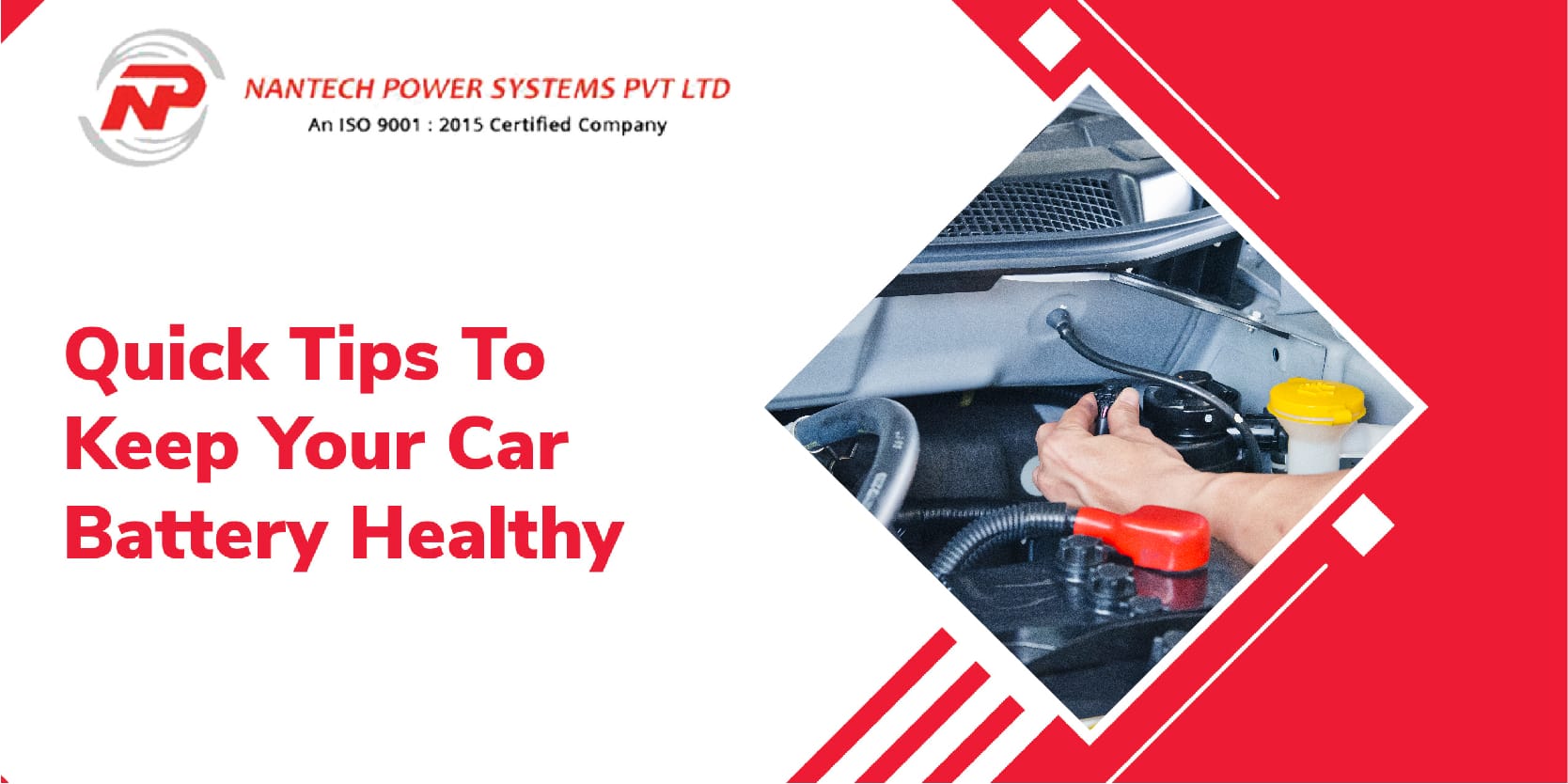
Quick Tips To Keep Your Car Battery Healthy

A battery is an indispensable part of your car. It can be compared to what the heart does to the human body- It constantly streams in a steady power source into your car components. All of the car’s electronics, including the ECU, headlights, AC, music system, horns, and even the starter motor, rely on the battery to function. And, that is why just like how we should keep our heart healthy, we should also keep our car battery healthy.

Say Checkmate To Climate

On average, a car battery should last between 2 and 6 years. However, the temperature can have a huge impact on the average battery life. A hot day can negatively affect the battery’s life expectancy because of the evaporation of its fluids. So, to make your battery last as long as possible, you must consider the climate in which you will drive. You should take extra care if you are driving in a hot climate.

It’s true that the climate is uncontrollable. But, you can control the battery damage in more than one way. Our experts understand your concerns about maintaining your vehicle batteries. That’s why we’re here to give you 8 tips to take good care of your car battery. As Chennai’s leading Exide car battery dealers and having served our clients for over two decades, we are confident that our maintenance guide will help your batteries last longer.

8 BEST TIPS TO PROLONG YOUR CAR BATTERY'S LIFE

A car’s battery is unquestionably one of its most essential components. While car operations are almost impossible with low batteries, its high repair and replacement costs make maintenance even more essential. Regular maintenance will ensure the safety of car batteries for many years to come.

In light of our experiences, we have listed below some tips for maintaining your car battery.

Let shade be your car’s brigade

It has been observed that high temperatures often impact the volume of Sulphuric acid inside the battery. Rapid evaporation of the acid causes the battery to die sooner. The best way to protect your car battery from high heat and humidity is to park it in a shaded area or under a covered parking area. This will ensure that your vehicle is not directly exposed to heat.

Clean the batteries umpteen times

Over time, car batteries accumulate dust and corrosion. Rust can form over metal parts of the battery, especially around the terminals, if exposed to dirt and humidity for a long time. These are often the major causes of short circuits and discharges that hinder the longevity of your battery. Therefore, it is highly recommended to clean the battery regularly with a dry cloth to ensure a steady flow of power for a long time.

Say no to quick rides

Short rides prevent your car’s battery from getting fully charged. To avoid this, we recommend driving long distances and doing so more frequently. Investing in a portable car battery charger is a sensible option if you don’t drive your car too often. You can use portable chargers to jump-start your car if you get stranded on the road. You will not have to rely on getting assistance from other vehicles if you have a portable charger with you.

Also Read: Why Should You Rent A UPS System?

Monitor the battery’s water level regularly

Battery cells contain distilled water which must be monitored regularly to ensure the appropriate level is maintained. Over time these liquids tend to evaporate and get drained, eventually concentrating the acid. This condition can result in corrosion and reduced battery life. To ensure that the battery’s water level is maintained properly, and if it becomes low, top it up right away.

Fasten your battery tight

Loosely fitted batteries are prone to vibration. Vibration can cause serious internal damage and short circuits. Regularly inspect the terminals of your car battery to make sure it is fastened tightly to the mounting bracket. This is especially important when you make a long and bumpy ride in your car.

Lower the power usage

You should turn off your air conditioner and radio when the engine is not running. Using these power-consuming features can cause wear and tear on your battery. It has also been observed that extended periods of idling are harmful to the batteries.

Ride often

Unused cars can reduce the lifespan of their batteries if they are left for long periods. If you do not use the batteries for a long time, you will be unable to start the vehicle. If you are not in town, ask a friend to drive your car around.

Never forget to turn off the lights

When you step out of your car, make sure you turn off your car’s lights. Leaving the headlights or door lights on can shorten the life of your battery. Consider making it a habit to check the car’s lights every time you use it. This way, you ensure that your battery is not stressed or overloaded, thereby extending its life.

Power your ride with good maintenance and durable batteries

Maintaining a car’s battery is vital to avoid incidents of breakdowns and unexpected damages. With the eight tips mentioned in this article, be confident about driving your car safely and without the fear of breaking down. As one of the best USP and Exide car battery dealers in Chennai, we ensure that your car batteries receive prolonged service life and optimum performance. Our services and products are exclusively designed to exceed your expectations and keep you satisfied in all possible ways.

Healthy Maintenance of Your Transformer

The Need for maintenance?

Transformers are a costly and necessary portion of any machinery. As it is used to minimize power line issues such as electrical noise, spikes, surges, and ground loops, insulation transformers are used. It also offers high resistance to insulation and complete electromagnetic and electrostatic shielding. So, it is best to conduct annual maintenance check ups on your machinery to get maximum efficiency and increase product life.
Nantech Power Systems Pvt. Ltd. which gives the best hardware solution in Chennai city also delivers AMCs (Annual Maintenance Contract) when selling our electrical goods.

Annual Isolation Transformer Maintenance Checklist

  • It is important to inspect the air fans, oil pumps, among other things used to cool down a transformer and control circuit annually
  • Make sure you use only soft cotton cloth every year to clean all the bushings of your electrical transformer.
  • OLTC's oil status should be closely investigated on an annual basis.
  • Make sure the interior of all the marshaling boxes is washed out annually. Check the proper functioning of the heaters for room and light. All the control and relay wiring terminal links need to be strengthened at least once a year.
  • It is important to clean all control switches, alarms and relays along with their circuits, the Remote Tap Changer Control Panel, and the Relay and Control Panel with an acceptable cleaning agent.
  • If they have the requisite oil level, check all the pockets for the Winding Temperature Indicator and Oil Temperature Indicator and make sure to top it up if needed.
  • It is important to verify the proper functioning of the Buchholz and Press Release System relays on an annual basis.
  • Ensure that the resistive force of the earth connection is determined and that the rizer must be measured with a clamp on the earth resistance meter. This has to be done on an annual basis.
  • Replacement of capacitors:
  1. Capacitance value changes can result in variations in the output voltage of the CVT-
    It’s expected usual manufacturing tolerances in the value of a spare capacitor to adjust the nominal setting of the original output voltage by less than 1 percent. With CVTs using a spare capacitor of the same color dot, the estimated output voltage difference will be less than 0.3 percent
  2. Over extended periods of time, the physical dimensions of commercial capacitors shift-
    Condensers would be comparable in size or smaller in general terms. A factory repair for units up to 3 kVA is recommended in case of any anticipated problem. When handling high voltage capacitor installations, caution must be taken

ALSO READ THIS: What is an Annual Maintenance Contract? And Why Should You Worry About It?

For more maintenance details of an isolation transformer

Preventive maintenance can help to detect problems and provides:

  • Increasing transformer life through condition monitoring
  • Lessen Maintenance Costs
  • Safe and reliable operation
  • Avoid a sudden breakdown

Conclusion: A famous saying “a stitch in time saves nine” used to express that it is better to spend little time and effort right now to avoid major problems in the future which may lead to cost more money sometimes life too.

Copyright © 2026 Nantech Power Systems Pvt Ltd. All Rights Reserved.
Nantech Power Systems Pvt Ltd · ups dealers in Chennai - Nantech Power Systems Pvt Ltd
magnifiercross