Nantech power systems business logo

BLOG

Understanding the risks of car battery terminal corrosion

As the monsoon season arrives in Chennai, it's a time when you should give your car some extra attention, and a little care now can save you from trouble later. Checking in with authorised Exide car battery dealers allows you to source a reliable power backup before the heavy downpours hit.

The high humidity and constant moisture from the rains are especially tough on your car's electrical systems; they can cause hidden damage that you might not notice until it's too late. In fact, these conditions often lead to a common yet overlooked issue: battery terminal corrosion.

As a result, this seemingly small build-up can become a primary cause of sudden failure, leaving you stranded with a car that won't start. Let's use this guide to find a simple, effective way to identify, clean, and prevent this problem, helping you avoid costly breakdowns this wet season.

Identifying the signs and effects of battery corrosion

Start by inspecting your battery terminals for any visible signs of trouble. This corrosion creates a barrier on the terminals because it acts like a blanket that blocks the flow of electricity — preventing the battery from delivering power efficiently.

Keep an eye out for these clear indicators:

  • Crusty Build-up: A bluish-greenish, powdery copper sulfate layer forming around the metal terminals. While corrosion naturally develops on the positive post, heavy build-up on the negative terminal specifically signals a chronic undercharging issue, which is highly common during heavy monsoon driving.
  • Slow Engine Crank: When you turn the key, the engine may turn over slowly because the battery cannot send enough current to the ignition system.
  • Flickering Electricals: Your headlights and dashboard lights may flicker, indicating your components are suffering from an insufficient power flow.

Beyond starting trouble, corrosion increases electrical resistance. This can cause voltage drops that may damage sensitive electronics like the Engine Control Unit (ECU) or radio. This extra resistance forces your alternator to work much harder, yet it still leads to reduced battery efficiency and a shorter overall lifespan for your battery.

If you leave this problem unchecked, you risk a sudden failure that could leave you stranded on a rainy day when you need your car most. So, what actually causes this corrosive build-up, and why does it seem to get worse during Chennai's monsoon season?

Exploring why high humidity accelerates battery corrosion

The chemical solvent housed inside a standard car battery contains a robust mixture of sulfur-based acids that naturally turn gaseous over time and slowly escape through the casing vents during daily operational cycles. While the release of these vented acid vapours is entirely common during normal vehicle usage, the gas emissions alone do not create the thick, stubborn crust you typically see building up on your vehicle's connections during the heavy rainy season.

The real catalyst behind this severe structural degradation is the exceptionally high atmospheric moisture and humidity levels that characterise the local monsoon climate. By mixing directly with the damp monsoon air, these venting sulfuric fumes trigger an aggressive chemical reaction right on the surface of the metal terminals, and this specific chemical interaction is what ultimately creates the crusty, power-blocking layer known as battery terminal corrosion.

Think of it exactly like raw metal rusting significantly faster when it is left out in a deeply damp or wet environment, as the exact same environmental process is actively at work under your hood. Not only does the intense atmospheric humidity drastically accelerate this chemical oxidation process, but the constant physical vibrations experienced while driving over deeply rutted monsoon potholes also make the structural problem significantly worse by causing more internal gases to escape the unit.

Now that you fully understand the hidden environmental reasons why this structural build-up happens, your next practical step is learning the precise steps to safely clean it away at home.

Also Read: Quick Tips To Keep Your Car Battery Healthy

A simple guide to cleaning battery terminals at home

Before you begin the process of cleaning battery terminals, ensuring your safety is the single most important step.

  • Engine Off
    First, make sure your car’s engine is switched off and has had time to cool down completely.
  • Protective Gear
    It is also crucial to wear safety gloves and eye protection to shield yourself from any potential acid splashes.
  • Disconnect Order
    When disconnecting the cables, always remove the clamp from the negative (-) terminal first, before touching the positive (+).
  • Reconnect Order
    Later, when reconnecting, you will follow the reverse order: attach the positive (+) clamp first, then the negative (-).

Thankfully, you can tackle most cases of battery terminal corrosion with just a few simple items from your home.

1. To start, prepare a cleaning paste by mixing a tablespoon of baking soda with a small amount of warm water.
2. Next, dip an old toothbrush into this baking soda and water solution and gently begin scrubbing the corroded areas.
3. You will likely see the corrosive build-up fizzing and dissolving, which shows the solution is working.
4. Once the fizzing stops, wipe away all the residue from the terminals using a clean, damp cloth.

With the terminals now clean and dry, you’ve successfully removed the immediate threat to your car’s electrical system. However — cleaning away existing corrosion is only half the battle; the real goal is to prevent it from coming back.

Essential techniques for preventing future corrosion

Instead of letting the problem return, protect your vehicle's electrical performance by adopting these straightforward habits:

  • Apply a Protective Coating
    Apply terminal grease or petroleum jelly right after cleaning. By creating a barrier that seals out moisture and acidic fumes, this coating effectively prevents battery terminal corrosion.
  • Secure the Battery Bracket
    Ensure your battery is securely fastened in its bracket. If your battery becomes loose due to road vibrations, the shifting unit can crack its casing, spill corrosive acid onto internal wiring, or cause loose terminal connections that trigger sudden electrical failures.
  • Keep the Engine Bay Dry
    Make it a habit to wipe off any residual moisture from the battery and engine bay with a clean cloth after you have driven through heavy rains or washed the car.

Check all clamps and cable connections for tightness and apply a layer of terminal grease or anti-corrosion spray. This protective barrier prevents moisture from seeping into loose points and causing short circuits. While these home maintenance habits work wonders, certain warning signs mean it is time to let a professional look over your electrical system.

Knowing when a professional battery check is necessary

If your car still won’t start after you’ve cleaned the battery terminals, the problem could be a weak battery. A car battery typically lasts between three and four years, and older batteries may struggle to hold a charge. If your battery is nearing that age, schedule a professional battery check-up before the monsoon season as a wise precaution.

Electricity and water are a disastrous combination for your car. If your battery gets exposed to a significant amount of water, for instance by driving through a deeply flooded area, get it inspected by a professional technician immediately. An automotive-care provider uses specialised tools like multimeters and load testers for regular battery testing to assess your battery’s overall health and charge levels. Therefore, avoid driving through waterlogged areas and monitor your battery’s voltage and charge levels, especially during the monsoon.

When it is time for a replacement, do not buy a cheap, locally made battery, even if the lower price tempts you. Unbranded batteries typically offer shorter, unreliable warranties and struggle to maintain the stable voltage required to power your car’s sensitive electronics over time. Therefore, selecting high-quality replacement parts is crucial for your safety and peace of mind.

Taking these precautions ensures you are fully prepared before hitting the road, setting you up for a completely smooth and worry-free driving experience this season.

Your key to a trouble-free monsoon drive

Proper car care during the monsoon season is essential for maintaining your vehicle’s performance, safety, and longevity. This is exactly why simple habits, such as cleaning battery terminals and checking connections, play a massive role in ensuring a trouble-free drive. Performing these simple battery maintenance checks is your best defence against battery terminal corrosion, a problem you can easily prevent with regular inspections.

When you perform early maintenance, you avoid mid-journey breakdowns; otherwise, you face unnecessary expense and stress. This highlights the importance of these simple checks. For complete peace of mind, contact the experts at Nantech in Chennai, your authorised dealer for genuine, high-performance car batteries.

Understanding the Early Car Battery Replacement Signs to Avoid Being Stranded

For a car owner, there's nothing quite as frustrating as the stress of a no-start situation, yet how often do we miss the early signs that could save us from being stranded? The good news is that clear warning signs always appear well before a total battery failure.

While a battery might seem fine on the surface, performance drops usually indicate it's heading for trouble. Spotting these signals allows you to consult authorised Exide dealers for a proactive replacement, helping you completely avoid a sudden breakdown.

Let's walk through the most common car battery replacement signs, covering auditory, electrical, and physical warnings, beginning with what a failing unit sounds like.

Your Engine's Cry for Help: Audible Clues of Battery Decline

When you hear that slow, laboured engine cranking sound, you often know your car battery is warning you. Recognise this strained noise as a "slow engine crank" — it's one of the first signs your battery is losing power. Because a weak battery cannot supply enough current to the starter motor, the engine's cranking speed drops noticeably. If the engine fails to crank and produces a rapid clicking sound instead, the starter solenoid is attempting to engage without sufficient voltage.

Even if the car still starts today, the chances of it failing to start increase significantly tomorrow — hence, you should take these sounds seriously. Even though cold mornings amplify these symptoms, it's important to remember that even in warmer conditions, a slow crank is a red flag. By jump-starting your car more often than usual, you are actually seeing an obvious sign that something is wrong. A frequent jump-start within a short period confirms a permanent issue rather than a temporary glitch; it simply means the battery can no longer hold a charge.

A healthy battery should hold a charge without needing frequent boosting. Recognising these distinct auditory shifts early gives you a clear window to address the issue before a total breakdown occurs. While these sounds are clear alerts, your car's electrical system often gives its own set of subtle warnings that something is amiss.

Electrical Glitches Are More Than Just an Annoyance

A modern car's electrical system, which is packed with sensitive components ranging from the infotainment screen to the power windows, relies on a steady voltage because any power inconsistency can lead to a range of glitches.

Therefore, for your car's electronics to function without issues, the battery must provide a stable voltage; a dying battery that cannot hold a steady charge creates voltage fluctuations across the entire electrical system, affecting everything from the headlights to the dashboard.

Having unstable voltage will directly lead to glitchy electronics, and these erratic behaviours are a sure sign of an underlying power deficiency that you should not ignore. A weak battery triggers several common electrical symptoms. Let's take a look at them.

  • Headlights, which draw power directly from the battery, often dim or flicker, especially when the car is idling.
  • Your vehicle's infotainment system may reboot or shut off unexpectedly without any apparent reason.
  • Power windows and the sunroof could operate noticeably slower than usual, struggling to move.
  • Dashboard warning lights may flicker intermittently, and heated seats might fail to turn on altogether.
  • Keep in mind that if your cell phone refuses to charge when plugged into the car's USB port, it isn't a reliable sign of a car battery replacement.

Though these glitches might seem unrelated, they all have a single source: a weakening battery. Tracking these voltage inconsistencies allows you to catch internal power failures before they leave you stranded. However, while these flickering headlights and erratic electronics are strong indicators, the most definitive proof of a failing battery is something you can see and smell right under the bonnet.

Also Read: Quick Tips To Keep Your Car Battery Healthy

Physical Car Battery Replacement Signs You Can See and Smell

Performing a quick visual inspection under the bonnet is a reliable method — you know it can reveal key signs because there is often a clear physical change that tells you the battery is failing, giving you the confidence to act early. This structural swelling occurs when extreme heat or overcharging forces the internal cells to expand, making the unit unstable.

Next, check your battery terminals for any powdery buildup, a sign of corrosion. If you spot a white, green, or blue powder caked on the metal connectors, you have corroded battery terminals, a clear sign that the battery is leaking acid. This powdery buildup forms when venting hydrogen gas reacts with the metal connectors, rather than from a liquid leak. This corrosion disrupts the electrical flow, directly causing slow engine cranking or sudden start failures.

Quite often, a dying battery gives off a distinct Rotten-Egg or Sulphur Smell, which is a clear olfactory sign of a problem. Not only does this pungent odour indicate leaking battery acid, but it also signals severe internal battery damage that requires immediate attention. Suppose you notice that pungent smell, get the battery checked immediately, because it’s both unsafe and a sure sign of failure.

Visible structural deformation, terminal buildup, and strong smells clearly indicate internal damage that a mechanic must address. This means that, whereas the identification of such signs is important, prevention is always better, and one should consider knowing what affects their battery life.

Adopting a Proactive Approach to Battery Care

Knowing that a car battery's typical lifespan, which can range from three to five years depending on your driving habits and climate, is a finite period puts you in a proactive mindset. If your battery is near that age or older, reconsider waiting — proactive replacement is a smart move. Environmental conditions — driving habits, and your vehicle's type all play a role; your battery's lifespan can be shorter than expected. Severe heat, for instance, raises under-bonnet temperatures, which accelerates the battery's death. By taking only short trips, you prevent the alternator from having enough time to fully recharge the battery, leading to a gradual discharge.

The illuminated battery warning light, a dashboard icon shaped like a battery, signals a problem with your charging system. It could be the battery, the alternator, or the wiring, but ignoring it may leave you stranded. A malfunctioning alternator fails to maintain the electrical load while driving, gradually draining the battery and causing premature system failure.

Here lies the importance of doing routine battery checks, where technicians test every single battery at every routine service, irrespective of its apparent condition. There is one simple thing that one should do: have the battery checked whenever doing routine services, such as an oil check. Once the battery reaches three years old, it means it needs closer attention — hence, tests will be very important. Drivers must give close attention to batteries older than three years, since a previous passing test does not guarantee they are still good.

By conducting proactive battery tests and replacing batteries in a timely manner, you will avoid trouble and the risk of breakdowns. In the end, by realising that these underlying causes exist and by testing your battery proactively, you will be able to balance knowledge and practical indicators.

Take Charge of Your Vehicle's Reliability

While some car batteries fail gradually and display clear warning signs like slow cranking, others can experience sudden internal short circuits. This unexpected failure, often referred to as abrupt voltage collapse, can leave you stranded without any prior warning signs

As a car owner, spotting these early warnings is crucial because it helps you maintain your vehicle's reliability, avoid an emergency, and gives you peace of mind. Not only does proactive replacement save you time and money, but it also reduces stress.

Therefore, if you notice a slow engine crank, flickering dashboard lights, or terminal corrosion or if your battery is over three years old, schedule a checkup right away. To ensure your vehicle has the ideal power solution, contact our professional team at Nantech for genuine products and expert technical guidance in Chennai.

Your Guide to What Happens to Solar Panels During Summer

When you see your solar panels working under the bright summer sun, it’s easy to assume that heat and light work together. Hence, you probably expect maximum energy output, a common belief that needs a closer look. Discussing these expectations with a knowledgeable solar panel dealer can clarify how temperature shifts affect your system.

If you are wondering how solar panels reduce AC bills, it comes down to how they handle peak summer conditions. However, while sunlight helps generate power, excessive heat can actually reduce your solar panel's efficiency.

More sunlight is excellent for energy production, but the blistering ambient heat that comes with it is not. To clearly see what happens to solar panels during summer, we have to separate how light fuels the system from how heat slows it down.

This guide will explain the nuanced relationship, reassure you that high temperatures are not a cause for alarm, and build your confidence in your system’s performance during the hot months.

To begin, let’s explore how your solar panels generate electricity in the first place, as the process itself holds the key to this puzzle.

Why Intense Heat Can Reduce Solar Efficiency

Solar panels generate electricity by converting sunlight into power through a process called the photovoltaic effect. Photons from the sun’s light strike the photovoltaic cells, dislodging electrons within the panel’s atoms. The movement of these electrons then creates an electric current.

But it is sunlight, not heat, that powers your panels; excess heat actually reduces their efficiency. This is because heat increases the internal resistance within the photovoltaic cells; as a result, this increased resistance leads to a voltage drop. Although the current might see a tiny increase with temperature, the voltage drop is more significant, leading to a net decrease in total power output.

When your solar panels sit on a hot roof, the cell temperature is often much higher than the surrounding air temperature. In fact, the panel temperature can be at least 20°C above the ambient temperature.

Quality solar panels are engineered to withstand these extreme temperatures and are unlikely to be damaged by the heat. Solar panels achieve their maximum efficiency at a moderate baseline temperature of 25°C. But how can you measure exactly how much power is lost for every degree of heat?

How to Quantify Heat's Impact on Your Panels

Therefore, keep this in mind: to find out exactly how much power your panels lose in the heat, you should look at the manufacturer's datasheet. There, you'll see a term called the 'temperature coefficient (Pmax)', a metric that you can use to quantify the power loss from heat.

This is where the temperature coefficient comes into play; it tells you the exact rate of power loss as the panel heats up past its baseline testing environment.

At its core, Standard Test Condition (STC) serves as the factory temperature benchmark where the panel's official nameplate power rating is determined. According to the National Renewable Energy Laboratory (NREL), a panel’s overall efficiency typically drops by a predictable margin for every degree of heat gained past that ideal laboratory baseline. This is the key calculation all panel owners rely on to gauge hot-weather performance.

For example, if your system experiences a standard temperature drop in performance and heats up significantly under the direct sun, its overall power output will decrease by a set percentage calculated from that manufacturer's baseline.

And conversely, for every degree of drop below that factory baseline, the panel's maximum power capacity increases by that exact same percentage, meaning cooler weather can naturally boost your daily electricity output.

Not only do standard silicon panels have the typical coefficients we discussed, but other technologies like thin-film panels offer different, often better, temperature coefficients.

By designing these panels for high-heat environments, manufacturers have created options that help maintain a higher solar panel efficiency on hot days.

For a region where high temperatures are the norm, you should consider alternatives to standard mono or polycrystalline modules, as they can be a wise choice for maintaining efficiency.

Although this predictable efficiency drop is an important factor, it doesn't represent the full picture of summer performance. The impact of heat is often overshadowed by a far more powerful element: the sheer abundance of summer sunlight.

Also Read: Solar Panels: An Eco-Friendly Way To Power Your Home

Balancing Heat Loss with Longer Sunny Days

The summer sun is sitting higher in the sky, which lets your solar panels receive sunlight more directly. There are longer daylight hours in summer, too, giving your panels extra time to generate power. Having more daylight hours and a higher sun position will be the main reason your net power output is much higher in summer; hence, your system produces more energy.

This is because, for your system to produce maximum energy, the immense amount of summer sunlight far outweighs the small percentage loss from heat. When you compare the gains from longer days and direct sunlight, heat losses become a minor consideration. Solar installations will thrive in sunny regions and will produce the most energy during summer, when days are longer and brighter.

Even though when you have a cooler day, say, 10–20°C below the hottest, you might see a higher peak efficiency, the total daily generation is still highest in summer. But don't worry, your panels do not stop working completely; absolutely not. Sure, you will still see a steady output from your system even on the hottest afternoons, and your panels keep working.

When we look at the entire solar system, it's not just about the panels; not only do they face heat, but inverters and batteries also face challenges. Inverters, which convert DC electricity from your panels into AC power for your home, often face performance drops and can shut down completely to protect internal circuitry from severe thermal stress.

Continuous exposure to high temperatures bakes solar storage systems, causing lithium-ion cells to degrade rapidly and lose their ability to hold a full charge over time. It seems that when we consider how heat affects your panels, inverter, and batteries, recognising the need for a holistic system design becomes clear; we will explore that in the next section.

Ensuring Your Solar System is Built for Summer

To address the common question of what happens to solar panels during summer, smart engineering and professional installation can effectively manage the heat's impact on your system. This is where the concept of passive cooling, implemented by a skilled solar installer, becomes your primary strategy.

First, install your panels a few inches above the roof surface to allow airflow underneath. This gap promotes convective airflow, which naturally cools the panels by carrying away excess heat. Proper tilt also improves airflow and reduces trapped heat.

Another key strategy is to mount heat-sensitive components, like your inverter, in a shaded area. This prevents the inverter from overheating, a concern for system performance. This technique is particularly valuable when using a string inverter, as it can be placed away from the hot roof array.

Additionally, panels constructed with light-coloured materials can help reduce heat absorption. Selecting the right solar installer or a reputable power solutions provider is crucial for implementing these strategies effectively.Local companies often have a better understanding of regional climate patterns, leading to a more optimised system design.

Ultimately, these smart installation practices ensure your system performs efficiently, even when the temperature rises, reinforcing the overall reliability of your solar investment.

Your Solar Investment is Secure and Effective in the Heat

The summer heat is not something you need to worry about for your solar system. Ultimately, summer remains your peak production season because extended daylight hours easily secure your maximum energy yields.

Modern solar panels are built with high-temperature resilience to withstand the hottest conditions. Your investment delivers reliable energy even during heatwaves. For homeowners, ensuring your entire power system is just as resilient is key.

As a leading UPS manufacturer in Chennai, Nantech specialises in backup power solutions to guarantee complete stability for your home. Contact us today for your power stability needs.


Understanding How Solar Panels Reduce AC Electricity Bills

When the Chennai summer peaks, traditional air conditioning units draw substantial power from the grid and drive up your electricity bills. The summer forces you to use AC for a longer time, which consumes higher electricity tariff brackets.

There is nothing more distressing than your higher electricity charges because your consumption has crossed the threshold; hence, it is time to neutralise that heavy AC load with self-generated power.

To understand how solar panels reduce AC electricity bills and provide a solution for self-generated power, contact a reliable solar panel dealer to get started. For your home to be comfortably cool, installing solar panels that offset your energy consumption and provide a thermal barrier is a wise investment. Therefore, you benefit from both active savings and passive cooling.

The Dual Action Of Passive Cooling And Active Solar Energy Generation

Solar panels that you install will continue to take precedence in how they reduce AC electricity bills. They reflect heat and generate power, so make them your first line of defence.

Solar panels absorb sunlight to generate power, preventing the sun's rays from hitting your roof directly. This creates a shaded barrier that stops your home from excess heat and keeps the building underneath naturally cooler.

Without this shading effect, the cooling load would increase significantly. By keeping the upper structure of your home cooler, you reduce the AC's workload and improve efficiency.

Solar panels are becoming increasingly efficient for generating electricity during peak hours. Your AC unit will draw power directly from the panels and reduce your grid dependence. Hence, during those hours, you have a situation where your AC runs on solar power, your roof stays cooler, and your grid dependence drops.

Therefore, they generate power onsite, your AC can run on clean energy, and by generating your own power, you offset the electricity that would otherwise come from the grid.

During summer, solar generation is becoming perfectly aligned with peak AC usage; therefore, if you have solar panels, and since the panels also provide shade, your cooling needs are met efficiently for both homes and businesses.

Therefore, the combination of passive shading and active generation plays a massive role in your savings, because the panels both prevent heat and produce power, your AC works less and runs on free energy, and since this happens every sunny day, you have a scenario where your cooling costs drop, your grid dependence decreases, and your comfort improves.

Consider the Photovoltaic cells you install on your roof: they convert sunlight into electricity and will continue to do so for decades. If they are well maintained, they will power your AC effectively, and by maintaining them properly, you ensure long term savings. The panels both shade your roof and power your AC.

Your savings are substantial, and since this synergy diminishes utility costs, you will want to keep your panels efficient, so consult an expert for maintenance advice.

Maximising Financial Returns Through Solar Energy Efficiency

To ensure your AC runs on maximum solar power, you must clean your panels regularly and adjust their tilt. These straightforward maintenance steps show how solar panels lower AC bills by offsetting your cooling load and reducing your reliance on the grid.

In a dusty city, removing debris is essential to keep your solar array working at full capacity. Monitoring your system is equally important. These tools track performance through a dashboard, showing real time data so you can spot any drop in efficiency immediately.

For long term care, it is best to rely on a trusted professional. Furthermore, net metering proves highly effective. When your panels produce extra power during the day, you send that energy back to the utility company. In return, you receive bill credits that further lower your AC costs.

These credits are vital because they improve your return on investment and speed up your total savings. A well maintained setup can easily function for over 25 years, whereas neglecting maintenance leads to early degradation and lost efficiency.

Do not ignore these simple habits; they are incredibly effective for achieving energy independence. This is especially true for those who are looking to cut down on grid usage. If you want lower bills, focusing on quality maintenance ensures consistent results.

Every clean and check helps your savings grow. Once your system is running efficiently, you can then ensure the setup is perfectly sized to meet your specific cooling requirements.

After we understand how to protect our investment through proper care, we can move on to the strategic side of sizing a system that handles our daily AC usage.

Also Read: Understanding The True Solar Panel Lifespan For Your Home Asset

Strategic Planning For Solar-Powered Cooling Solutions

When you assess your cooling load to understand how solar panels reduce AC electricity bills, start by considering your project size and the number of rooms that you typically cool, and you love it when you make the assessment process straightforward.

There are physical constraints like

  • Roof age
  • orientation
  • Materials that dictate your energy potential

It's a scenario where site specific conditions matter for your system to achieve high output, despite modern solar panels being efficient. If you ignore these factors, your generation will suffer, and your roof's characteristics have and will always influence performance.

Before we calculate your air conditioning units' daily consumption, let's understand the formula: hours of operation times watts gives watt hours, which you then divide by 1000 to get kWh, because this is the key to tracking usage, and when you have the kWh number, you have to use it to size your system, so use this math.

Furthermore, with on grid solar systems, your air conditioning units draw from both solar and the grid; this is exactly the reason why a grid connected setup is the smart financial choice for high cooling demand, because it's not so much a battle between solar and grid as a partnership, and understanding the work of your system grasping the connection and leveraging net metering enhances savings.

In addition, if you are unsure about the exact number of solar panels needed now, think again; instead of overcomplicating the decision, you can start with a smaller system. Therefore, for your future needs to be met, know that adding capacity later is standard, and when you plan for expansion, you'll be grateful.

Ultimately, no, you don't need to be a solar expert, but a professional assessment from a trusted expert ensures accuracy, so start by contacting a local expert and let's take a look at your specific roof. If you want flawless implementation, you should trust a pro and apply this guidance for any setup.

Embracing a Sustainable Cooling Future With Solar Energy

Understanding how solar panels lower AC bills leads to substantial long term savings. By cutting your reliance on the grid, you move toward true energy independence. This lifestyle upgrade offers both passive cooling and active power, making it a practical choice for any household.

To get the best return on your investment, you should look into the government’s rooftop solar subsidies now. Taking advantage of these financial incentives reduces your upfront costs and helps you recover your initial spend much faster. Beyond the money, switching to solar helps shift away from fossil fuels and lowers your carbon footprint.

With electricity prices likely to rise, installing a system early protects your savings. The sooner you make the switch, the more you benefit from available support. Solar energy is a reliable, long term solution that keeps your home powered while keeping costs low.

This is why choosing a specialist like Nantech in Chennai makes sense. Combining their expertise in UPS manufacturing with a professional solar setup ensures your home remains powered without interruption. With expert guidance at every stage, you can secure your energy future and start saving.

Understanding how solar panels help the environment today

Solar energy offers one of the most effective ways to make a real difference showing how solar panels help the environment by cutting emissions, lowering reliance on fossil fuels, and promoting cleaner air. For anyone who is eco-conscious, starting this transition now matters taking action against climate change reduces global warming, and despite minor manufacturing emissions, solar panels have a short energy payback period that quickly shrinks your carbon footprint. Working with a trusted Solar panel dealer can help you plan this clean energy shift step by step. Let’s explore how to build a sustainable power future together.

Reducing greenhouse gas emissions and improving public health

Every time you flip a light switch, there’s a chance to choose a cleaner path. Solar energy isn’t just hardware, it’s a way to replace fossil fuels and cut greenhouse gas emissions like CO₂ (carbon dioxide) and methane. By generating your own clean power, you’re taking meaningful steps for your home and community’s health embedding progress into your lifestyle.

So, how solar panels help the environment goes beyond electricity. They reduce

  • Air pollution
  • Particulate matter
  • Nitrous oxides
  • Sulfur dioxide.

As more people in your community adopt solar, air quality improves, helping prevent chronic bronchitis and cardiovascular issues. Millions breathe unsafe air, and with the World Health Organisation reporting that most people are exposed to pollutants, your switch to clean energy is vital.

Even small choices make a difference: installing solar can reduce local traffic emissions, lowering exposure to harmful chemicals like benzene or formaldehyde. Solar panel ensures your home taps into a sustainable energy system, balancing environmental benefits with long-term reliability.

By taking these steps, you’re not just updating your technology you’re creating a safer, healthier, and more sustainable future for your family and community.

Next, let’s explore how these solar solutions translate into measurable CO₂ savings and forest-equivalent benefits.

Succeeding with the energy payback time of solar installations

Understanding the environmental impact of your solar system starts with

  • Energy Payback Time (EPBT) is how long it takes for your panels to “pay back” the energy used during manufacturing. Think of it as the story your home tells about green energy: every kilowatt-hour produced adds to your positive impact.
  • Productivity varies by location, so working with a local Solar panel dealer reduces transport emissions and ensures your investment delivers results faster. Modern monocrystalline silicon panels are increasingly efficient, with research from Fraunhofer-Gesellschaft showing energy payback times dropping dramatically—sometimes to less than a year. This means your system quickly starts generating net-positive clean energy for your home.
  • Long operational lifespan and durability are key. Efficient, well-maintained panels ensure decades of clean electricity while minimising emissions.
  • Even though manufacturing and recycling processes involve some energy, advanced industry practices help turn waste into reusable materials, making each panel a long-term contributor to sustainability.
  • When most of a solar panel’s 30-year life produces net-positive energy, every installation translates into measurable reductions in carbon, saved trees, and cleaner air. Your investment isn’t just technology, it’s a commitment to your home, community, and planet.

However, the story of how solar panels help the environment extends beyond carbon accounts; therefore, let’s take a look at the blueprint for resource and water conservation next. Transitioning to a guided approach for the next major benefit will allow you to apply sustainability in any field or platform.

Preserving water and finite natural resources through renewable technology

There are traditional power plants that consume vast amounts of water for cooling, but Solar Photovoltaic (PV) systems are all about providing energy, saving water, and making technology feel accessible that you can install on your roof. So that you don't waste resources, and you significantly advance water conservation.

Water Scarcity: How to cope with the change? Here, you’re finding solutions, and solar is becoming more popular by the second as the World Wide Fund for Nature (WWF) reports 1.1 billion people lack access. Or, if you ignore the fuel cycle, your reliance on mining, drilling, or fracking for fossil fuels just doesn’t work; case in point: don’t be a catch-all that ignores the depletion of finite resources.

For your home to survive future climate updates, it needs to avoid hazardous waste from coal-fired plants; otherwise, you’re wasting money and risking land degradation. At its core, local generation is about efficiency. Again, think of the energy grid: by generating power on-site and thus continually bypassing traditional delivery, you reduce energy transmission losses, and it’ll be worth it.

In a nutshell, understanding how solar panels help the environment requires a firm, confident commitment to preventing ecological damages: acid rain, ocean acidification, and habitat loss. A new era calls for new tactics; before we talk about land use, let’s lay out this blueprint one layer at a time.

Also Read: Understanding The True Solar Panel Lifespan For Your Home Asset

Optimising land use and supporting biodiversity on a local scale

  • Many rooftops go unused, but ignoring them for solar energy risks unnecessary land conversion. Treat your roof like a storefront for clean energy, this is how solar panels help the environment.
  • Start by prioritising degraded lands abandoned mining sites, brownfields, and transmission corridors—for solar farms. Working with a Solar panel dealer helps repurpose these areas, protecting high-quality soil and reducing habitat loss.
  • Solar farms can also support biodiversity. By integrating pollinator-friendly landscaping, like native wildflowers, you create habitats that anchor local wildlife.
  • Agrivoltaics combining solar panels with crop production allows land to flow seamlessly between energy generation and agriculture, giving communities a dual harvest of clean power and food.

Every installation can engage, persuade, and transform land responsibly. When designed thoughtfully, solar farms have minimal impact on surrounding ecosystems while generating substantial environmental benefits. Wildlife thrives alongside quiet, low-impact energy production, free from noise or light pollution.

Sustainable land use starts with small, deliberate choices. By combining rooftops, degraded lands, and smart design, you reduce your footprint and contribute to a cleaner, healthier environment.

Don’t ask if land protection is enough; as this strategy builds a sustainable future, you’ll want to start by reducing your own footprint. Let’s lay out this blueprint one layer at a time.

Lowering the carbon footprint of modern homes and businesses

  • For your property isn’t just a building, it’s a stage for clean energy. Turning your roof into a renewable power source reduces your ecological footprint. Every solar panel you install adds real value, helping your household or business adopt a sustainable lifestyle. This change can offset the same amount of emissions as driving approximately 19,000 miles in a year, making its impact clear and tangible. Understanding solar technology, how it integrates with your home, and combining it with tools like heat pumps or electric vehicles helps you move from a grid-dependent consumer to a self-sufficient producer. One day, you might be charging your EV (electric vehicle) with sunshine; the next, heating your home with a heat pump. This seamless adoption of clean energy is becoming more popular by the day.
  • For businesses, showcasing real savings and a greener image builds trust, attracts customers, and demonstrates commitment to sustainability. Every project is an opportunity to lower overheads while improving operational resilience. Power reliability is essential. Solar batteries provide backup during outages, protecting your food, electronics, and peace of mind.

A simple, well-planned system makes energy use straightforward, reliable, and efficient, while cluttered setups create unnecessary stress.

Pillars of a good solar system are:

  • Efficiency
  • Accessibility
  • Trustworthiness

Working with a qualified Solar panel dealer ensures your installation is smooth, professional, and long-lasting. This is exactly how solar panels help the environment while securing your home’s energy future.

Before we talk about the future, let's understand what a net-positive home looks like today. You only start saving money after all this planning is complete. Above the fold on your property, the idea of sustainability can capture attention and prepare you for what's next.

Embracing a cleaner future with sustainable energy solutions

In the energy universe, the sun never diminishes: what does it do? It helps optimise your footprint. Why act? Solar energy is the primary solution for climate change, setting the precedent for global sustainability.

When solar energy powers Earth for a year, ignoring your long operational lifespan means you’re just guessing. Your choice is a North Star; this is how solar panels help the environment by ensuring a net-positive impact.

Adopting solar isn't a one-and-done deal; if you seek carbon neutrality, the renewable world is beckoning. This is why a Solar panel dealer and leading UPS manufacturers in Chennai, like Nantech, inherently recognise effective solutions. Instead, do this: contact Nantech to make your transition firm, confident, and memorable.

Understanding The True Solar Panel Lifespan For Your Home Asset

A solar panel’s lifespan is not defined by the moment it stops producing electricity but by its useful life, typically 25 to 30 years, during which it delivers most of its original output. This gradual reduction in efficiency is known as solar panel degradation, a predictable decline that shapes the overall solar panel lifespan based on environmental exposure. On average, degradation occurs at a rate of 0.5% to 1% per year.

A 2024 study by the U.S. National Renewable Energy Laboratory (NREL) identified a median annual performance loss of 0.75%. In practical terms, a panel operating at full capacity in its first year will still perform at 99.25% in year two and over 81% after 25 years. This predictable decline explains why manufacturers offer performance warranties, typically guaranteeing 80% efficiency at the end of the warranty period.

Rather than being a concern, this managed degradation reinforces solar panels as reliable, long-term assets. However, degradation rates vary based on material and manufacturing quality, which is why choosing a reputable solar panel dealer plays a critical role in ensuring long-term performance and value.

Key Quality Factors That Determine A Long Solar Durability

The foundation of a long solar power system lifespan rests on two key pillars - material quality and manufacturing quality. The type of panel you choose and how well it is built largely determine how long it will reliably produce power for your home.

For the longest-lasting investment, monocrystalline solar panels are the premier option. Made from pure silicon, they offer superior material quality and typically deliver a lifespan of 25 to 30 years. This high-quality construction results in a very slow performance decline - with degradation rates usually between 0.3% and 0.5% per year. Even after 25 years, monocrystalline panels can still operate at roughly 80% to 92% of their original efficiency.

Polycrystalline solar panels provide a dependable and more cost-effective alternative, though they generally have a slightly shorter lifespan of around 20 to 25 years. Thin-film panels, while affordable and flexible, have the shortest lifespan - typically lasting 10 to 20 years.

Beyond the solar cells themselves, overall construction quality is equally critical. Durable aluminium frames are widely preferred because they resist corrosion and handle temperature changes effectively - protecting both the panel edges and internal cells. High-quality sealing, soldering, and connectors further prevent moisture ingress and electrical failure. To identify panels built to these standards, look for third-party certifications from organisations such as the International Electrotechnical Commission (IEC) or Underwriters Laboratories (UL) - which confirm rigorous safety and performance testing.

Protecting Your Asset From External Stressors And Upkeep Needs

While a panel’s built-in quality is essential, the solar panel lifespan it achieves in your home is also strongly influenced by external factors after installation. Climate, weather conditions, and installation quality are the two most significant forces shaping long-term performance.

Persistent high heat and humidity place physical stress on panels - causing materials to expand and contract through repeated temperature cycles. Over time, this can gradually degrade internal connections and seals. Panels installed in moderate climates generally degrade more slowly than those exposed to consistently high temperatures. That said, most modern solar panels are rigorously engineered and tested to withstand extreme conditions - such as hail, heavy rain, and snow.

While the weather is beyond our control, installation quality is not. Poor installation can result in,

  • Incorrect tilt angles
  • weak mounting
  • Inadequate sealing
  • Leading to water ingress
  • Structural stress
  • Premature electrical failures

A professional, high-quality installation acts as the first and most critical line of defence - directly protecting the system’s long-term performance.

Ongoing care is straightforward. With no moving parts - solar panels are low-maintenance.

  • A simple routine includes periodic cleaning to remove dust, leaves, and bird droppings that block sunlight, along with occasional visual inspections to check for damage to frames or seals.
  • Performance monitoring via your system's app to track energy output.
  • These simple actions deliver clear benefits -  cleaning restores full sunlight exposure, inspections catch small cracks early, and monitoring helps detect performance drops before they become major issues.

The only significant and predictable maintenance cost over the system's life is the replacement of one component - the inverter.

It is a manageable, long-term cost you can anticipate, as an inverter typically needs to be replaced every 10 to 15 years.

Ultimately, while climate is an uncontrollable variable - ensuring excellent installation quality and performing straightforward maintenance are your most powerful tools for protecting your solar investment for the long haul.

Moreover, these hands-on measures protect your asset, but your investment is further secured by the powerful guarantees that manufacturers put in place to ensure performance for decades.

Also Read: Solar Panels: An Eco-Friendly Way To Power Your Home

How Warranties Guarantee Your Solar Panels As A Long-Term Asset

In addition to hands-on care - your investment is further protected by the strong legal guarantees manufacturers provide to support long-term performance. There are two primary warranties that safeguard your system - the Product Warranty and the Performance Warranty.

The product warranty covers defects in materials and workmanship and typically lasts between 10 and 25 years. What happens after 20 years of solar panels? The performance warranty directly addresses long-term effectiveness by guaranteeing energy output over time. Specifically, it ensures the panel’s performance will not decline below approximately 85% of its original capacity over a 20-year period.

This guarantee represents the manufacturer’s confidence in the product’s durability and secures the long-term value of your investment against degradation. To put this into perspective, few major home improvements - such as a roof or boiler - come with a comparable 25-year performance guarantee.

So, how often do solar panels need to be replaced? Many high-quality solar panels continue producing meaningful power well beyond their 25- or 30-year warranty period.

This long-lasting durability naturally leads to an important final consideration - what happens to solar panels at the very end of their extended lifecycle?

The Complete Lifecycle From Production To Responsible Recycling

When your solar panels complete their useful life of around 30 years, they are decommissioned and require careful end-of-life management. The good news is that solar panel recycling processes are becoming more robust and viable as technology advances. By recovering valuable materials, like

  • Silicon
  • Silver
  • Aluminium

These specialised facilities capture crucial resources. This direct action reduces the overall waste stream and prevents useful materials from ending up in landfills.

This is why there has been notable progress in creating specialised recycling plants to manage the growing number of panels. Therefore, this complete lifecycle perspective - from responsible recycling to regulated disposal - is a crucial final chapter that solidifies the true long-term value and sustainability of your solar investment.

Securing Decades Of Clean Energy From Your Solar Investment

Decades of research and real-world data from various regions and climates consistently affirm the long-term reliability of solar panels - confirming their status as a secure investment built on durable, long-term value. This makes your solar panel a low-maintenance, cost-saving home asset, designed to deliver reliable power generation for the entirety of its 25 to 30-year solar panel lifespan and beyond.

When you consider its complete journey - from resilient manufacturing through to responsible end-of-life management - the true sustainability and enduring worth of this technology become clear. Therefore, for your home to achieve genuine, long-term power security, investing in a system with a proven - long-lasting solar longevity is a critical step.

For homeowners in Chennai ready to secure this lasting benefit, reach out to Nantech-expert UPS manufacturers who understand precisely what it takes to build a truly reliable and efficient home energy foundation.

Reach out to Nantech today for a consultation and secure your power supply.

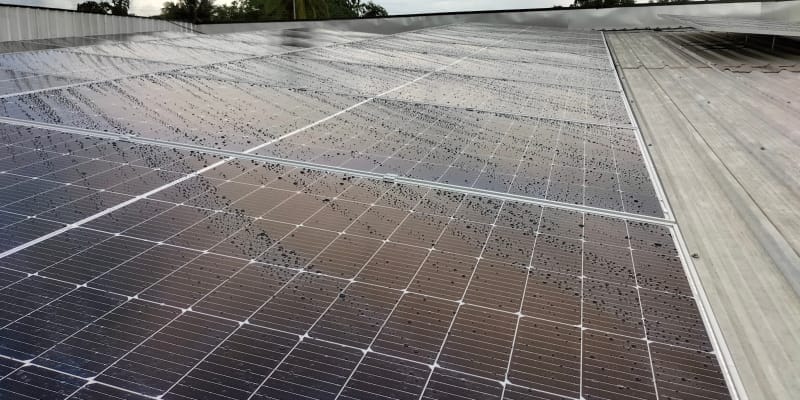
Do Solar Panels Work in the Rainy Season? Exploring the Facts

When it comes to solar energy, a common concern is whether solar panels can work / generate power during the rainy season. This is an important point to address — especially for regions that experience heavy monsoon rainfall.

And the reassuring fact? Solar panels continue to work efficiently even during the rainy season..

Although their power output is lower on cloudy days, they continue to generate energy because they rely on light, not just direct sunlight.

Looking for a reliable solar panel dealer in Chennai? Nantech stands out as a trusted solar panel dealer offering quality systems and expert installation.

This guide unravels how modern solar technology performs on rainy days, what to expect in terms of energy production, how to choose a solar panel, and how you can maximise your system’s efficiency year-round. Let’s begin by looking at the science behind power generation on cloudy days.

The Science of Power Generation on Cloudy Days

The core principle behind solar power generation on cloudy days is the photovoltaic effect.

  • This effect occurs within semiconductor materials — such as silicon — which are fundamental components of solar panels.
  • When sunlight — which is made up of particles called photons — strikes the surface of a solar cell, it triggers a process. This impact liberates electrons from their atoms — initiating a flow that forms an electric current.

This raises an interesting point: “Do solar panels work if there is no sun?”

  • While solar panels require total darkness to stop completely (at night), they do not need the sun to be visible to work.

The silver lining is that visible light, which consists of photons, still penetrates cloud cover. This diffused or indirect sunlight provides enough energy for the photovoltaic cells to continue generating electricity — but at a reduced rate.

This capability to harness both direct and indirect light is key to understanding how solar panels work in the rainy season. As a result, your solar system remains operational through various conditions — reliably converting light into power.

Next, let’s explore how to manage performance expectations for your solar system in a monsoon.

Also Read: Why should you clean your solar panels?

Managing Solar Panel Performance in the Monsoon

  • On cloudy days, solar panels typically generate 30–50% of their peak capacity.
  • During heavy rain in the monsoon, power output can drop to 10–20%.

While the cloudy and rainy conditions of the monsoon result in reduced efficiency, production does not stop because panels capture diffused light to continue generating electricity. This ongoing generation helps you cut down on your carbon emissions — even at a lower capacity.

Furthermore, to manage these seasonal fluctuations, solar energy operates on a principle of annual balancing.

  • The energy credits accumulated during your system’s peak summer production compensate for the lower output during the monsoon months via net metering.

This balance makes the solar investment viable and effective throughout the entire year.

There’s also a beneficial side effect to consider: rain naturally helps keep solar panels clean by washing away dust and debris. While rainfall provides only a partial cleaning, regularly ensuring that panels are free of stubborn dirt and streaks is essential for maximising energy output once the skies clear.

Understanding these performance nuances raises an important question: “Which solar panel is best in the rainy season?” The next section explores the panel technologies that perform well in low-light and rainy conditions.

Choosing Panel Technologies Suited for Low Light Conditions

The right solar panel technology plays a key role in maintaining consistent energy production — especially during low-light conditions in the rainy season.

Here are the panel types that perform best in such conditions:

Monocrystalline Silicon Solar Panels

Monocrystalline silicon solar panels are the top-tier option when it comes to high efficiency. Their single crystal structure is the key feature that allows them to absorb and utilise sunlight effectively.

The objective of these solar panels is to convert sunlight into electricity with high efficiency — and their single crystal structure enhances this process by allowing precise absorption of photons. Even though cloudy days present a challenge, they can still generate a significant amount of energy.

Thin-Film Solar Panels

Thin-film solar panels are a technology that performs particularly well in rainy climates due to their unique ability to capture a broader light spectrum. This ability allows these solar panels to maintain consistent energy production during cloudy days.

Bifacial Solar Panels

Bifacial solar panels are defined by their ability to absorb light from both the front and the back. This design means they can capture both direct and reflected sunlight, making these solar panels particularly effective during low-light conditions — including capturing sunlight that bounces off clouds or wet surfaces.

While technology choice is critical, the efficiency gains realised from selecting the right panels are only fully unlocked through proper installation and maintenance — let’s discuss this next.

Practical Steps to Maximise Your Solar Output During a Rainy Spell

Before diving into maintenance, it is important to clarify: “Can solar panels get damaged by rain?”

  • The answer is NO — solar panels are built to be weather-resistant and hermetically sealed.

Here are a few practical steps that can significantly boost your system's performance:

  • To begin, make use of the rain’s self-cleaning capabilities by setting your panels at an angle that lets water glide off naturally. This natural process provides a basic rinse of the panels. For any stubborn debris like bird droppings, regular panel cleaning with a soft cloth and water will prevent build-up.
  • Next, it is essential to position your panels to avoid shadows, as even small obstructions have a greater impact when sunlight is already scarce. Therefore, ensure nearby trees or fast-growing branches do not obstruct the path of sunlight and trim them if needed.
  • Finally, monitor the amount of electricity your system produces in real-time using monitoring software. This allows you to spot any drastic drops in energy output, which might indicate a malfunctioning component rather than just a cloudy day. This data empowers you to schedule professional checks when necessary — addressing potential issues like loose connections or debris build-up before they escalate.

By implementing these straightforward maintenance tips, you ensure your solar investment remains efficient and reliable all year long.

Harnessing Solar Power All Year Round

The answer to the question, “Do solar panels work in the rainy season?” is YES — solar panels do work during the rainy season, although electricity generation is naturally lower.

  • By storing excess electricity in a solar battery, you allow your energy supply to flow seamlessly from sunny days to rainy days — ensuring continuous power.

Ultimately, modern solar installation plays a massive role in providing long-term reliability because it is designed to endure virtually all weather conditions and adheres to stringent quality standards.

Looking for a well-designed solar system that delivers reliable performance year-round? At Nantech Power Systems Pvt. Ltd., Chennai, we provide custom solar solutions with battery storage that ensures continuous power generation in all weather conditions.

Connect with us today for a dependable solar solution!

Navigating Common UPS Maintenance Mistakes and How to Avoid Them

A Uninterruptible Power Supply (UPS) is a foundational investment for safeguarding business continuity and ensuring the continuous operation of your critical systems.

However, the reliability of a UPS and overall system uptime are entirely dependent on proper upkeep and consistent UPS maintenance — as simple maintenance errors can lead directly to:

  • Reduced reliability of power protection systems
  • Unplanned downtime
  • Equipment damage
  • Significant financial losses

With this in mind, looking for a UPS maintenance partner? Nantech — one of the leading UPS manufacturers in Chennai — helps businesses ensure optimal UPS performance.

This guide outlines the most common UPS maintenance mistakes and ways to avoid them. Let’s begin by understanding the key factors behind UPS failure.

What is the Main Cause of UPS Failure?

The main cause of UPS failure is battery degradation — batteries have a finite life and lose capacity over time, leading to unexpected shutdowns during power outages.

Other major factors include:

  • Overheating (due to dust, bad fans, or poor ventilation)
  • Component failure (capacitors, fans, power supplies)
  • Poor maintenance
  • Overloading

So, how to troubleshoot UPS problems?

To troubleshoot:

  • Start with basics: check connections, wall outlets, and power switches.
  • Run a self-test and check error codes/lights for deeper issues like overload or battery failure.
  • Finally, manage the load, update the firmware, or replace ageing batteries as needed, always consulting your manual.

Understanding why UPS failures occur is only the first step — let’s now look at the most common oversights and how they can be prevented.

Also Read: Key Things to Consider When Buying Active Harmonic Filters

4 Key UPS Maintenance Mistakes and Prevention Steps

Here are the four most common UPS maintenance mistakes — and the practical steps to avoid them before they impact system reliability:

1. Neglecting Routine System Checks and Records

Simply installing UPS and forgetting it, only checking when a problem is already apparent.

This “set and forget” approach allows undetected battery degradation to go completely unnoticed.

  • These small, unaddressed faults can escalate — leading to UPS failure precisely during a critical power outage, causing unexpected system shutdowns.

Your action plan should start with a simple, routine series of checks:

  • Perform regular visual inspections to check for physical changes — like battery swelling, corrosion, or fluid leaks.
  • Understand that your UPS has built-in warning systems; regularly check its status indicators and alarm codes to understand the system's health. Similarly, keep the UPS manual accessible to correctly interpret what different lights and error codes signal.
  • Keep your maintenance area clean yet straightforward. Ensure the space around the unit is clean, dry, and free from dust or obstructions for proper ventilation and function.
  • Diligent record-keeping is also a way to know your system's long-term health. Ask the right questions of your logs to track inspection dates, battery health metrics, test results, and planned replacement schedules.

Using both routine inspections and detailed logs will allow your maintenance strategy to flow seamlessly — helping you identify performance trends over time and plan future upkeep proactively.

2. Mismanaging the UPS Operating Environment and Electrical Load

Failing to maintain the optimal temperature environment for your UPS.

Heat is the number one battery killer; for every 10°C above 25°C, battery life halves — a severe reduction in its serviceable lifespan.

  • When the UPS is installed in areas with poor ventilation — like a cramped closet or equipment room — overheating becomes inevitable.

Your action plan must be simple and direct:

  • Maintain the room temperature between 20 and 25°C.
  • Ensure at least 6 inches of clearance on all sides of the unit for proper airflow.

Beyond environmental control, one of the most critical UPS maintenance mistakes is the mismanagement of electrical load.

When your UPS has printers, monitors, or even coffee makers plugged into it, you are connecting, for example, non-essentials that can push the system beyond its designed UPS load capacity.

  • An overloaded unit will shut down during a power outage — leaving your critical servers and workstations completely unprotected.

This problem often stems from a common confusion about the outlets on the unit itself — misunderstanding their distinct purposes:

  • Battery-Backed Outlets — solely for your essential equipment, like servers and computers that must stay online during an outage.
  • Surge-Only Outlets — for non-essential peripherals that need protection from power spikes but do not require backup battery power.

So, to prevent overloading the UPS:

  • Perform a detailed power audit to understand your true power needs — ensuring you are sizing a UPS correctly for long-term reliability.

Controlling these external factors is critical for UPS's longevity.

3. Overlooking Crucial Battery and Component Lifecycles

Delaying the replacement of UPS batteries and capacitors until they fail.

This error stems from a misunderstanding that these are consumable parts.

  • Batteries typically have a finite service life of just 3–5 years; they naturally degrade over time, losing their ability to hold a charge, which leads to battery failure.
  • Similarly, capacitors, which store and release electricity, have a lifespan of 5–7 years and must be replaced proactively to avoid capacitor failure.

To avoid these failures, your proactive maintenance plan should include:

  • Replacing batteries on time — mark your calendar for battery replacement every 3 years (or 2 in hot climates).
  • Inspecting and maintaining terminals and connections monthly for corrosion and ensuring they are tight.
  • Ensuring correct charging — avoid overcharging or undercharging, which can damage the battery and reduce its efficiency.
  • Performing regular load tests — following the manufacturer’s guidelines — to confirm your batteries can deliver the required runtime.

Note: It’s also a mistake to replace batteries one at a time, as the new ones can be damaged by sharing a system with old, failing batteries.

4. Ignoring Simple Procedural and Setup Best Practices

Overlooking firmware updates regularly released by UPS manufacturers.

  • Keeping your system up to date is an effective way to protect it from performance bugs and address potential security vulnerabilities.

To tackle this mistake:

  • Apply firmware and software updates to maintain optimal performance and close security loopholes.

Another dangerous practice is using extension cords or daisy-chaining power strips from the UPS output.

  • This setup creates serious fire hazards and voltage drops that can damage sensitive equipment — without proper connections, you could face safety risks.

To handle this, follow a simple yet effective habit:

  • Perform the monthly self-tests to quickly simulate a power failure and verify your system's readiness.
  • Modify and categorise your routine: simply press the “Test” button on the unit each month.
  • Apply this action consistently to confirm that the battery and transfer switch work correctly.

A critical organisational mistake is failing to act on the recommendations provided in technicians' service reports.

  • Ignoring paperwork/not acting on recommendations reduces the effectiveness of the system’s reliability.

For your system's reliability to be effective:

  • Review these reports and take action to mitigate identified risks before they become costly failures.

Ultimately, this proactive blueprint helps correct the common procedural oversights.

Shifting to a Proactive UPS Maintenance Approach

Ongoing UPS maintenance is not a cost but a crucial investment in your operational resilience.

By avoiding the common UPS maintenance mistakes, you ensure:

  • Your power protection remains robust and supports your business continuity.
  • Your system reliability is guaranteed and directly results in the uptime your business depends on.

Ready to ensure your power systems are resilient, compliant, and future-ready? At Nantech Power Systems Pvt. Ltd, Chennai, we help businesses avoid common UPS maintenance mistakes and maintain reliable backup power.

Connect with us today for a professional power system assessment!

Key Things to Consider When Buying Active Harmonic Filters

In today's industrial and commercial environments, “Harmonic Distortion” — a byproduct of non-linear loads like variable frequency drives and UPS devices — is a primary cause of poor power quality.

This distortion leads to a range of operational issues — including:

  • Overheating transformers and cables
  • Malfunctioning sensitive equipment
  • Higher energy bills
  • Premature component failure

This is where “Active Harmonic Filters (AHFs)” come into play as a crucial solution.

They actively:

  • Suppress harmonics.
  • Correct power factor.
  • Minimise system losses to restore electrical stability.

This guide provides you with a practical checklist that outlines the essential things to consider when buying AHFs.

How to Choose an Active Harmonic Filter?

Choosing an AHF involves assessing your system’s harmonic levels, load profile, and compensation needs. The right filter should match current rating, voltage, and performance requirements while allowing room for future expansion.

Consider the following:

  • Required harmonic compensation
  • Current and voltage rating
  • Load type (stable/variable)
  • THD limits and power factor needs
  • Space, budget, and future capacity margin

So, what are the requirements for an active harmonic filter?

An AHF requires appropriate system compatibility, correct installation conditions, and proper monitoring to function effectively. It must match the site’s voltage, harmonic profile, and performance goals for THDi and PF correction.

Key requirements include:

  • Parallel connection to the load
  • Correct voltage and frequency rating
  • Adequate compensation capacity
  • Proper CT placement and direction
  • Configuration matching system conditions

With these basics covered, the next step is to assess your facility’s actual harmonic profile for accurate filter sizing.

Assess Your Facility’s Unique Harmonic Profile

Harmonic distortion varies uniquely from one facility to another.

Therefore, conducting a thorough harmonic analysis or audit is the essential first step before purchasing an AHF. This assessment:

  • Reveals your facility's specific harmonic profile — a critical baseline for any solution.
  • Details the primary non-linear loads.
  • Measures the total harmonic distortion (THD) at key points.
  • Identifies the dominant harmonic orders.

This data-driven understanding is crucial for accurately sizing and configuring your AHF.

  • Neglecting this analysis can lead to either suboptimal performance from an undersized unit or wasteful overinvestment in an oversized one.

Moreover, the analysis determines whether selective harmonic compensation is needed.

With this foundational data in hand, you can confidently proceed to evaluate the filter's technical specifications and internal architecture.

Also Read: Why Choose Active Harmonic Filters Over Passive Harmonic Filters?

Evaluate the Core Performance and Technical Specifications

Beyond the high-level specifications, one of the most vital things to consider when buying active harmonic filters is the internal inverter topology.

  • Most modern AHFs may use a 3-level NPC inverter topology, which offers distinct benefits over the conventional 2-level inverter topology.

This leads to:

  • Lower losses
  • Higher efficiency
  • An extended component lifetime
  • Reduction in Total Cost of Ownership (TCO)

However, as topologies vary across manufacturers, it is important to verify this feature in the vendor's datasheet.

When your facility has dynamic loads like welding machines or cranes, you must evaluate the AHF's response time to ensure swift harmonic mitigation. The harmonic compensation capacity isn't fixed — it degrades at higher harmonic orders, a factor known as “derating”.

  • Derating values differ from one manufacturer to another.

However, a derating curve alone cannot demonstrate the filter's true capability; the di/dt capacity remains an important indicator of real dynamic compensating performance — especially in rapidly fluctuating load environments.

Furthermore, to prevent electromagnetic interference, the AHF must be fitted with a properly designed EMC filter.

The next logical step is to assess the AHF's physical design and how it will integrate into your facility's infrastructure.

Consider the Physical Characteristics and System Integration

Most suppliers offer several installation alternatives: wall mount, cubicle type, or loose modules that can be installed inside existing cubicles.

  • Your choice will depend on the available physical footprint, while a cubicle-type installation often provides a greater IP rating.

Beyond the immediate fit, scalability and modularity are key things to consider when buying AHFs, as a modular design allows for future expansion.

  • This approach enables you to add filtering capacity as your facility's loads grow — ensuring you don't have to replace the entire system.

Furthermore, assess the AHF's capacity for system integration with other power quality equipment.

  • Some AHFs support integration with detuned capacitor banks or APFC panels, creating a Hybrid Var Compensator (HVC) — but this capability varies between vendors, so confirm compatibility during the evaluation stage.

Finally, while AHFs can be connected to medium-voltage systems using a step-up transformer, be aware that this can reduce compensation performance due to increased impedance.

The next step is to evaluate how you will monitor and manage the AHF's daily performance.

Review the Usability and Smart Monitoring Features

In the age of Industry 4.0, remote monitoring and intelligent diagnostics are no longer optional but essential for AHFs, as they play a crucial role in enhancing operational efficiency.

  • Your chosen filter should include an intuitive Human-Machine Interface (HMI) — such as a graphical LCD touchscreen that displays key data like voltage and current waveforms for easy on-site control.

This on-site capability must be supported by remote monitoring, integral to smart grid functionality.

  • Look for systems that offer access via web-based interfaces, Ethernet, or Modbus protocols — allowing you to manage the filter from any location.

By utilising these smart features, you can:

  • Log events.
  • Monitor multiple units.
  • Perform remote analysis.

This supports proactive maintenance and minimises production disruptions.

Enter commissioning software: it is vital for a streamlined installation process and represents a significant value-add.

  • Ensure the software performs automated routines — including self-checks for voltage and CT phase order, CT polarity verification, self-diagnosis, and self-calibration.

These functions drastically shorten commissioning time and prevent errors, therefore reducing system costs and dependency on external support.

This focus on usability and smart features directly contributes to the filter's financial justification, which we will explore next.

Calculate the True Cost and Return on Investment

When building a business case for investment in an AHF, don't focus solely on the initial purchase price — instead, evaluate the TCO and Return on Investment (ROI).

TCO stands for the comprehensive cost over the asset's life — including:

  • The purchase price
  • Installation
  • Maintenance
  • The filter’s own operating losses (typically a small percentage depending on the design)
  • Expected lifespan

Investing in a high-quality AHF saves energy losses, eliminates equipment downtime, avoids penalty fees, and prolongs asset life — with these cost savings flowing directly into your ROI.

  • Begin by documenting the current power factor penalties from your utility bills; in many installations, facilities recover AHF investment through reduced penalties — often within a 2–5 year range, depending on load profile and utility tariff structure.
  • Then, estimate the annual costs from harmonic-related equipment failures; case in point, even a single unplanned motor drive failure can justify the AHF investment by highlighting the financial impact of downtime.

For a balanced calculation, factor in the AHF's own energy consumption, noting that the exact consumption varies with topology and load conditions.

For the investment to be secure, it needs protection from a comprehensive warranty; only then can you truly mitigate long-term financial risk by comparing terms beyond the standard 1–2 years.

With these financial and operational benefits in mind, the next step is to verify the manufacturer’s reputation and the level of long-term support available.

Verify Manufacturer Reputation and Long-Term Support

As you finalise your selection, remember the manufacturer is not merely a supplier but a long-term partner — crucial for your facility's operational reliability.

Reputable manufacturers provide comprehensive support, covering:

  • Pre-sale technical advice
  • Application engineering
  • Post-sale services — like commissioning, operator training, and emergency assistance

For instance, ask: “Does the vendor provide application engineering support — such as harmonic studies — before purchase?”

  • This single service can prevent the costly mistake of improper sizing — saving you from significant financial losses.

Furthermore, verify the emergency service response times in your region and assess the depth of operator training provided to minimise errors.

You must also scrutinise the warranty terms and inquire about Annual Maintenance Contracts (AMCs) to protect your investment long-term. Additionally, require references from facilities with similar load profiles to validate the supplier's expertise and performance claims.

This thorough due diligence ensures expert support is always available — safeguarding your investment throughout the lifecycle of the AHF.

Making a Future-Proof Power Quality Investment

Ultimately, a carefully chosen AHF delivers:

  • Significant cost savings
  • Improved system reliability
  • Optimal outcomes
  • A strong ROI
  • Protection against future operational and compliance risks

Ready to ensure reliable power quality? At Nantech Power Systems Pvt. Ltd — one of the leading UPS manufacturers in Chennai — we provide the right AHF for your power system. Connect with us today to schedule your power solution consultation!

A Practical Guide to Active Harmonic Filter Types for Your Facility

Harmonics are one of the biggest challenges in modern electrical systems, affecting power quality. The presence of harmonics leads to issues like:

  • Overheating of equipment
  • Malfunctioning of sensitive devices
  • Reduction in efficiency
  • Higher energy costs

To tackle these problems, Active Harmonic Filters (AHFs) have emerged as an effective and reliable solution.

AHFs:

  • Mitigate harmonics.
  • Improve the power factor.
  • Balance load currents.
  • Enhance electrical networks' overall stability and performance.

This blog explores the most common types of active harmonic filters used, how they work, and the factors influencing their selection.

Most Common Types of Active Harmonic Filters

Here are the most widely used active harmonic filter types across commercial, industrial, and utility applications:

Shunt Active Harmonic Filters

The most common type of AHF used for commercial and industrial applications. These filters operate by injecting harmonic currents that have equal magnitude but are opposite in phase to the harmonic currents produced by the non-linear load to which they are connected.

Key Features

  • Connected in parallel between the load (non-linear) and the power supply
  • Compensate for current harmonics as a controlled current source
  • Most effective for current-source (non-linear load) type harmonic problems
  • Can simultaneously provide reactive power compensation

Shunt AHFs constantly measure the load current, extract the harmonic components via signal processing algorithms, and produce the necessary compensating current using power electronic converters. They commonly employ Insulated Gate Bipolar Transistors (IGBTs) or other fast-switching devices to ensure accurate current injection.

Shunt AHFs are ideal for applications where there are multiple non-linear loads or when the load conditions change significantly throughout the day. They are typically used for manufacturing facilities, hospitals, data centres, and any type of commercial building where variable frequency drives and other power electronic devices create harmonic distortion.

Also Read: How Does an Active Harmonic Filter Work: A Detailed Exploration

Series Active Harmonic Filters

Not as widely used as shunt filters. These filters are particularly suited for applications where voltage harmonics are the main/primary issue.

Key Features

  • Connected in series with the power line, operating as a controlled voltage source
  • Compensate for voltage imbalances and voltage harmonics
  • Function as a harmonic isolator between the load and the source
  • Typically need lower current ratings compared to shunt filters

Series AHFs measure the supply voltage, detect harmonic components, and inject compensating voltages to make sure a clean sinusoidal voltage is delivered to the load. They are especially effective in isolating critical sensitive loads that may experience voltage distortion from the utility supply or other loads on a shared electrical system.

The primary challenge with series AHFs is that they must carry the full load current. They are ideal for medium-power applications that demand precise voltage quality.

Hybrid Active Harmonic Filters

Utilise both active and passive filtering technologies in order to leverage the benefits of both while reducing the drawbacks of each approach. This hybrid combination provides an economical approach to harmonic mitigation for applications with high power.

Common Hybrid Configurations

  • Active Filter With Passive Filter in Series: The passive filter deals with the majority of the lower-order harmonics (5th and 7th), and the active filter addresses the higher-order harmonics as well as compensates for the limitations of the passive filter.
  • Active Filter With Passive Filter in Parallel: Both the active and passive filters independently operate in parallel, with the passive filter providing basic-level compensation and the active filter addressing dynamic changes and remaining harmonics.

Key Advantages

  • More cost-effective than pure active filters in high-power applications
  • Lower rating requirements for active filters
  • Better efficiency for harmonic compensation at steady state
  • Higher reliability via complementary operation

Hybrid filters are especially popular in heavy industrial applications where harmonic currents are high/significant and economic considerations are a concern.

Multi-Level Active Harmonic Filters

Represent a sophisticated topology that utilises multiple voltage levels to synthesise the compensating current waveform. Rather than switching between two voltage levels — positive and negative DC bus — these filters can switch between three or more voltage levels.

Key Features

  • Create smoother output waveforms with minimised switching frequency
  • Reduced EMI (electromagnetic interference)
  • Minimised stress on switching devices
  • Better accuracy of harmonic compensation

The typical configurations include — cascaded H-bridge converters and three-level neutral point clamped (NPC) converters. Multi-level topologies are being increasingly used in medium-voltage applications where standard two-level converters may fall short.

Modular Active Harmonic Filters

A collection of smaller filter units that can be assembled together to achieve the required compensation capacity — providing benefits in terms of both scalability and redundancy.

Key Advantages

  • Easy capacity expansion via adding modules
  • N+1 redundancy for enhanced reliability
  • Reduced downtime for maintenance (individual modules can be serviced)
  • Scalable deployment for growing facilities

Modular designs have become popular in hospitals, data centres, and mission-critical facilities where system availability is paramount. If one module fails, the remaining modules remain operational — ensuring power quality management continues uninterrupted.

Up next — key aspects that guide AHF selection.

Factors to Consider While Selecting AHFs

  • Load Type: The magnitude and type of the harmonics generated by the loads greatly influence the filter selection. Shunt filters work best for current harmonics, while series filters mitigate voltage harmonics.
  • Voltage and Power Levels: For higher voltage and power applications, hybrid or multi-level configurations may provide a better economic and technical justification.
  • Existing Infrastructure: Facilities with existing passive filter installations would likely find the hybrid configurations the most cost-effective option for upgrades.
  • Space and Installation Constraints: The modular option provides adaptability in tight spaces and supports gradual, phased deployment.
  • Budget and Economics: While pure active filters provide the best performance, hybrid configurations offer adequate compensation with minimised costs for high-power applications.
  • Future Expansion: When load growth is anticipated, consider using modular designs.

Generally, shunt active filters or hybrid active filters are preferred due to their scalability, enhanced performance, and affordability. Therefore, selecting the right filter is not just a technical choice but a strategic investment tailored to your specific operational and financial goals.

Making the Right Choice for Financial and Operational Stability

Ultimately, matching the active harmonic filter types to your specific business risk enables you to effectively transform a capital expenditure into a predictable profit driver, offering tangible financial security and long-term savings.

At Nantech Power Systems Pvt. Ltd — one of the leading UPS manufacturers in Chennai — we help you secure your power supply with effective active harmonic filters. Connect with us today for expert consultation tailored to your needs!

1 2 3 15
Copyright © 2026 Nantech Power Systems Pvt Ltd. All Rights Reserved.
Nantech Power Systems Pvt Ltd · ups dealers in Chennai - Nantech Power Systems Pvt Ltd
magnifiercross